

Caption: Our modern fabrication shops use advanced laser cutters for precision work.
A recent news article from WA. GOV.AU (20 Aug 2025) caught my attention:
A mining fabrication company was fined $500,000 after a falling metal plate seriously injured a worker. The court found the company failed to provide a safe work environment.
This incident solidified a thought I've long held: if you need a trustworthy metal fabrication supplier for your machinery or engineering projects, outsourcing to China should be a top consideration—whether your priority is superior quality, significant cost reduction, or both.
You've likely heard stories from peers or competitors who sourced parts from China and gained immense advantages: prices half of local suppliers, rapid delivery, and consistently good quality. If you have a large project with a tight budget or need a long-term partner, it's time to consider why China is the optimal choice.
The Foundation of China's Metal Fabrication Dominance
- Massive Domestic Demand
China isn't just a populous nation of over 1.4 billion; it's the world's second-largest economy with immense purchasing power. This fuels a colossal domestic demand for metal fabrication, driven by endless infrastructure projects—bridges, roads, tunnels, and buildings. The country uses nearly one billion tons of steel annually, with at least 50% requiring fabrication before use. This creates a stable, high-volume market that sustains the industry.
- A Vast, Skilled Supplier Base
A huge number of domestic fabricators meet this massive demand. China is home to an estimated over 17,500 professional metal fabrication shops, a figure extrapolated from the annual sales of laser cutting machines. This ecosystem is hyper-competitive, meaning only the most efficient and capable survive.
The workforce is another key advantage. Metal fabrication is labor-intensive and requires high skill levels in what's known as the 4M's: Metals, Maths, Machine operation, and Mechanical engineering. China possesses a formidable demographic dividend: over 350,000 mechanical engineers (roughly 8 times the number in the USA) and an even larger pool of skilled technicians.
- A Hyper-Competitive Landscape
The intense competition means that surviving companies, like Openex, are proven winners. They have overcome immense challenges, from material shortages during COVID-19 to global logistics crises. This Darwinian business environment ensures that only the most resilient, efficient, and customer-focused fabricators thrive, ultimately benefiting the buyer.
The Two Core Advantages of Sourcing from China
- Unparalleled Competitive Pricing
Several factors contribute to unbeatable prices:
- Supply & Demand Dynamics: A hyper-competitive market with a complete industrial chain ensures you get the best possible price. Other regions often rely on Chinese materials, adding cost and delay.
- Massive Production Capacity: China produces over 50% of the world's crude steel, 58% of its aluminum, and 55% of its stainless steel. This domestic abundance grants fabricators a significant raw material cost advantage.
- Efficient Logistics: With the world’s largest highway network and fully automated ports (like Shanghai, Ningbo, and Shenzhen), transportation is fast and inexpensive.
- Low-Cost, Stable Electricity: Industrial electricity rates in China are among the lowest and most stable globally, often a third of the cost in other developed countries.
- Surprisingly High and Consistent Quality
The outdated stereotype of "cheap and low-quality" is obsolete. Chinese fabrication quality now excels across every process:
- Materials: Domestic carbon steel, stainless steel, and aluminum meet global standards. Specialty metals like high-strength steel (690MPa+) or wear-resistant plate (equivalent to Hardox 400) are readily available and affordable.
- Cutting: Fabricators use advanced laser, plasma, and waterjet cutting. The widespread adoption of technology is driven by the fact that Chinese laser cutters cost less than 30% of comparable international machines. 3D laser cutting ensures superior accuracy for complex parts.
- Forming: shops are equipped with massive CNC press brakes (up to 3000t capacity and 15m length), rolling machines, and hydraulic presses capable of handling most tasks with high precision.
- Welding: With over 1.32 million welding robots deployed as of 2025, automation guarantees consistency. For specialized tasks, highly skilled manual welders are available at a fraction of the cost in Western countries.
- Machining & Assembly: Advanced multi-axis CNC machine tools offer exceptional cost-performance, often completing turning, milling, and drilling in a single setup. This vast industry is supported by China's enormous pool of mechanical engineers and skilled technicians, ensuring professional assembly and quality control.
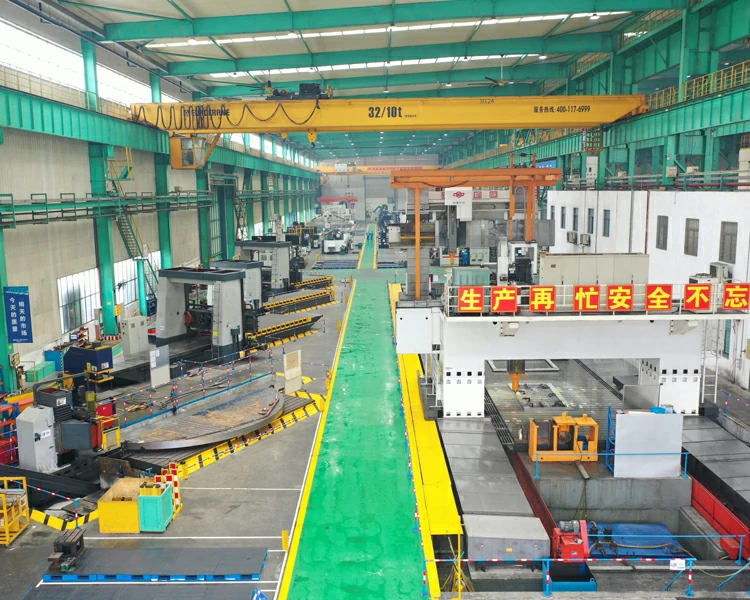
Caption: A multi-axis CNC machining center of Openex in China, capable of high-precision, complex operations.
The Time to Act is Now
China's advantages in cost and quality are undeniable, but they may not last forever. Demographic shifts and a declining birth rate mean the current pool of skilled labor may shrink in the coming decade.
Why not explore what it can do for your business today?
Contact a professional metal fabricator like Openex to discuss your project needs and discover how you can achieve superior quality while cutting your costs in half.