Home >> Heavy Machining Cases: Ball Mill Cylinders
Heavy Machining Cases: Ball Mill Cylinders
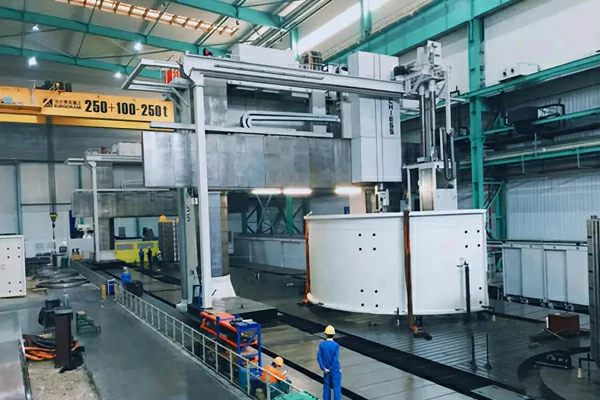
Recently, Openex took on a challenging project, machining mill cylinders for a mining company. This task tested our technical capabilities and provided valuable experience in machining large components for ball mills.
Overview of the Mill Cylinder
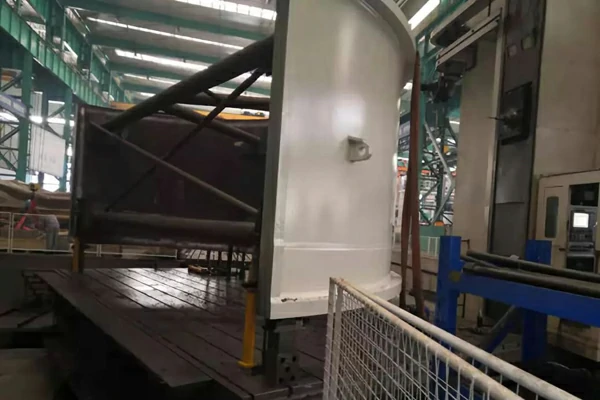
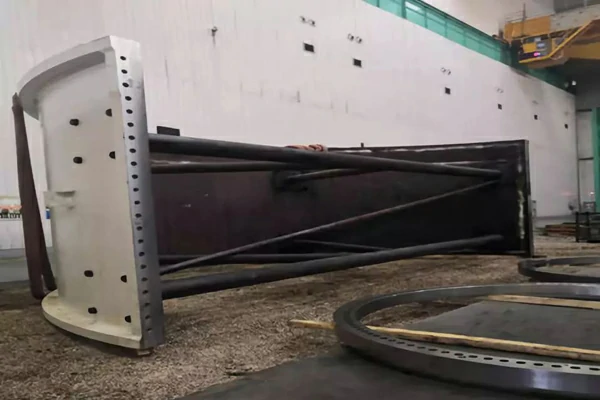
The mill cylinder has a diameter of about 9000mm and comprises two halves connected by bolts. Each cylinder weighs nearly 55 tons. Given the large size and weight of the metal component, ensuring machining precision and efficiency became the most significant challenge.
Technical Requirements and Challenges
The cylinder machining project came with high technical requirements:
Flange Verticality: The verticality between the two end flanges needed to be controlled within 0.05mm. This is critical because even a tiny deviation could affect the final assembly and lead to operational instability in the mill.
Runout Tolerance: The runout tolerance was also set at 0.05mm. Runout refers to the deviation of the center of rotation. If it's too high, the mill's performance could be compromised, causing early wear or even failure of the equipment.
Surface Roughness: The surface roughness had to meet a specification of 3.2 microns. A smooth surface is essential for the component's operational efficiency and its interaction with other parts in the mill.
Small Holes Machining: The cylinder features several small holes on both ends and along the body, which had to be machined in one go. Given the precision required for these holes and their close spacing, we needed to ensure accurate positioning and sizing without any inconsistencies.
These strict requirements are not only very demanding for high precision from our equipment but also from the operators. This was our first time machining such kind of mill cylinders, and much of the work involved adapting to new challenges.
Machining Process and Equipment Selection
To successfully complete the project, we carefully planned each step of the machining process and selected the appropriate equipment.
The first step was to machine the flange faces on both halves of the cylinder, ensuring they would align correctly during assembly. For this task, we used the Innse 280 floor borer. This machine offers excellent stability and precision, making it ideal for large components like the mill cylinder.
Process: We first secured the two halves of the cylinder on the Innse 280 floor borer. Then, using a boring tool, we carefully machined the faces along the join line. Throughout this process, we focused on controlling the cutting depth and feed speed to prevent overheating or deformation.
Challenges: The sheer weight of the cylinder generates significant cutting force during machining, which can lead to deformation or excessive tool wear. To minimize risks, we adopted a step-by-step machining approach, with slow feed rates to maintain stability and prevent issues.
2. Overall Turning and Drilling — Using the Vertical Lathe
After machining the flange faces, we moved on to the overall turning and drilling of the cylinder. Given the large size of the component, a conventional floor borer was not sufficient. Therefore, we opted for a 22-meter vertical lathe for this part of the process.
Turning: The vertical lathe allows for large-diameter workpieces, which makes it perfect for turning the outer surface of the cylinder to precise dimensions. We paid special attention to the tool choice and cutting parameters to avoid creating rough surfaces during the turning process.
Drilling: The small holes required for both ends and along the cylinder needed to be drilled in a single setup. These holes required high precision, so we used the multi-functional drilling head on the lathe. Cooling fluid was used to reduce heat buildup, ensuring smooth hole walls and accurate hole diameters.
Challenges: Given the close spacing of the holes, it was critical to avoid misalignment between them. Each hole also needed to be drilled with strict verticality and parallelism to ensure the assembly would fit together properly. We took multiple measurements and adjustments to ensure the holes met the required specifications.
3. Precision Inspection and Fine-Tuning
Once the initial machining was complete, we thoroughly inspected the cylinder to ensure all specifications were met. We used a coordinate measuring machine (CMM) to check verticality, runout, and other key tolerances.
Challenges During the Machining Process
Machining Large Workpieces
The size and weight of the mill cylinder were the biggest challenges. Especially during turning and drilling, the large workpiece was prone to instability, which could result in deformation. To overcome this, we used custom jigs and fixtures to secure the workpiece and maintain its stability throughout the machining process.
Precision Control
Maintaining precision was another significant challenge. Small deviations, particularly with the flange verticality, runout, and hole positioning, could affect the assembly and performance of the final product. We addressed this challenge by continuously measuring and adjusting during the machining process to ensure that every parameter was within tolerance.
Adapting to a New Design
This was our first time machining a two-piece mill cylinder, so we had to adjust to a new design and unfamiliar machining requirements. We prepared by carefully reviewing the blueprints and conducting equipment tests before starting the machining process. Operator training was also crucial to ensure everyone involved was familiar with the process and could handle any unexpected issues.
Conclusion
This project was a successful challenge and a valuable learning experience for us. We successfully met the customer’s requirements while also improving our capabilities in machining large components, maintaining precision, and adapting to new designs. Moving forward, we aim to continue refining our processes and expanding our capabilities to handle even more complex tasks.
At Openex Metal Fab, we are always striving to improve our technical skills and enhance our machining processes to provide top-quality service to our clients. If you have any upcoming machining needs or want to learn more about how we can help with your next project, don’t hesitate to get in touch!
Openex is home to a full-service, one-stop-shop, contract manufacturing company producing custom large machined parts and fabrications. Our full large fabrication services including large machining, cutting, welding, rolling, punching, braking, testing, painting, and others.