
In the world of precision manufacturing, the spotlight usually falls on the micron-level tolerances of a finished part. But when that part weighs 50 tons and spans 10 meters, the challenge isn’t just cutting the metal—it’s moving it.
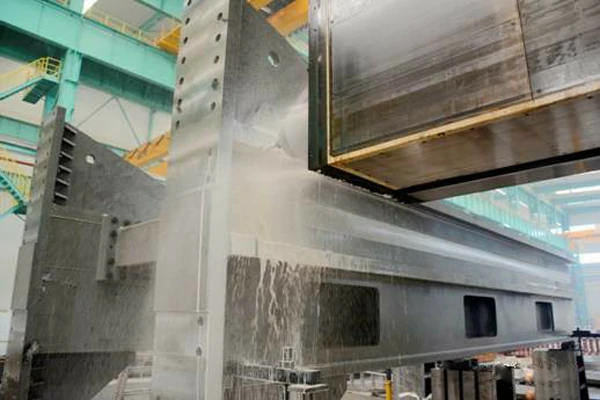
For procurement managers sourcing contract manufacturing in China, the logistics of handling oversized components is often a major source of anxiety. How do you move a massive raw casting without cracking it? How do you flip a 30-ton weldment to machine the other side? How do you ship it across the ocean without it rusting?
At Openex, we believe that heavy machining logistics is just as much an engineering discipline as the machining itself. Here is a behind-the-scenes look at the journey of a massive component through our facility.
The process begins long before the first chip is cut. When a raw casting or forging arrives at our facility—often for the mining or hydropower industries—it can weigh anywhere from 20 to over 100 tons.
Standard forklifts are useless here. Openex is equipped with heavy-duty overhead crane systems with lifting capacities exceeding 50 tons (with tandem lifting capabilities for even heavier loads).
The Critical Step: Incoming Inspection
Before we lift a finger to machine, we must ensure the raw material is sound. Moving a massive casting requires a dedicated rigging plan. Our certified riggers inspect lifting lugs and determine the center of gravity to ensure a safe lift. Once offloaded, the raw part undergoes immediate dimensional and visual inspection to ensure sufficient "stock" material is present for machining.
The most dangerous time for a heavy part is not when it’s being cut, but when it’s being moved. A complex housing or frame might need to visit multiple stations:
Stress Relieving: Moving to our large-scale heat treatment furnaces.
Sandblasting: Transporting to surface preparation booths.
Machining: Loading onto our heavy-duty floor borers or gantry mills.
Flipping the Unflippable
Many large parts require machining on multiple faces. Flipping a 40-ton asymmetrical part is a high-stakes operation. We utilize specialized welding positioners and rotators, as well as engineered turning fixtures. This allows us to rotate massive components safely and precisely, preventing damage to the part (and protecting our team) while ensuring we don't induce new stresses into the metal.
Once the part is machined to precision, validated by our CMM inspection, and painted, it faces its final adversary: the ocean.
Transporting oversized machined parts from China to Europe, Australia, or the Americas involves weeks at sea in a high-humidity, saline environment. Standard packaging is a recipe for a rusted, rejected part upon arrival.
Openex employs a rigorous export packaging protocol for heavy cargo:
Anti-Corrosion Science: We utilize VCI (Vapor Corrosion Inhibitor) films and desiccants that create a chemical barrier against moisture. For critical machined surfaces, we apply heavy-duty rust preventatives that the customer easily removes but are impenetrable to salt spray.
Vacuum Sealing: For sensitive equipment, we foil-bag and vacuum seal the entire component.
Custom Steel Skids: Wood pallets crush under 50 tons. We fabricate custom structural steel skids designed specifically for the footprint and weight distribution of your part. This ensures that when the crane lifts the skid, the machined part experiences zero torque or twisting forces.
How does it leave the factory?
Open Top / Flat Rack Containers: For parts that fit within standard width/length but are too heavy or tall for standard boxes, we load them into Open Tops or secure them to Flat Racks using heavy-duty lashing chains.
Break Bulk: For the truly massive components (exceeding container dimensions entirely), we coordinate Break Bulk shipping. We transport the item directly to the port on low-bed trailers, where it is lifted individually into the ship’s hold.
We don't just have big machines; we have the infrastructure to feed them. When you choose Openex, you aren't just buying CNC time. You are buying a complete logistical solution that safeguards your investment from the moment the raw material arrives until it lands safely at your site.
Do you have a project that is too heavy or awkward for your local shop?
Let us handle the weight. Contact Openex for a consultation on your large-scale manufacturing needs.
Contact Us for Heavy Fabrication Support
When manufacturing small components, the orientation of the machining process is rarely a logistical crisis. However, when you step into the world of heavy fabrication—dealing with parts that weigh 50 tons or span 5 meters in diameter—physics takes over.
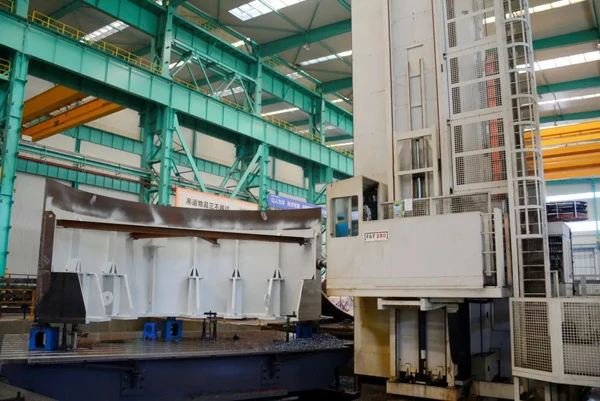
At Openex, we frequently guide procurement managers and engineers through the decision-making process for manufacturing large-scale rotational parts. Two primary methods dominate this field: Heavy Horizontal CNC Turning and Vertical Boring (VBM/VTL).
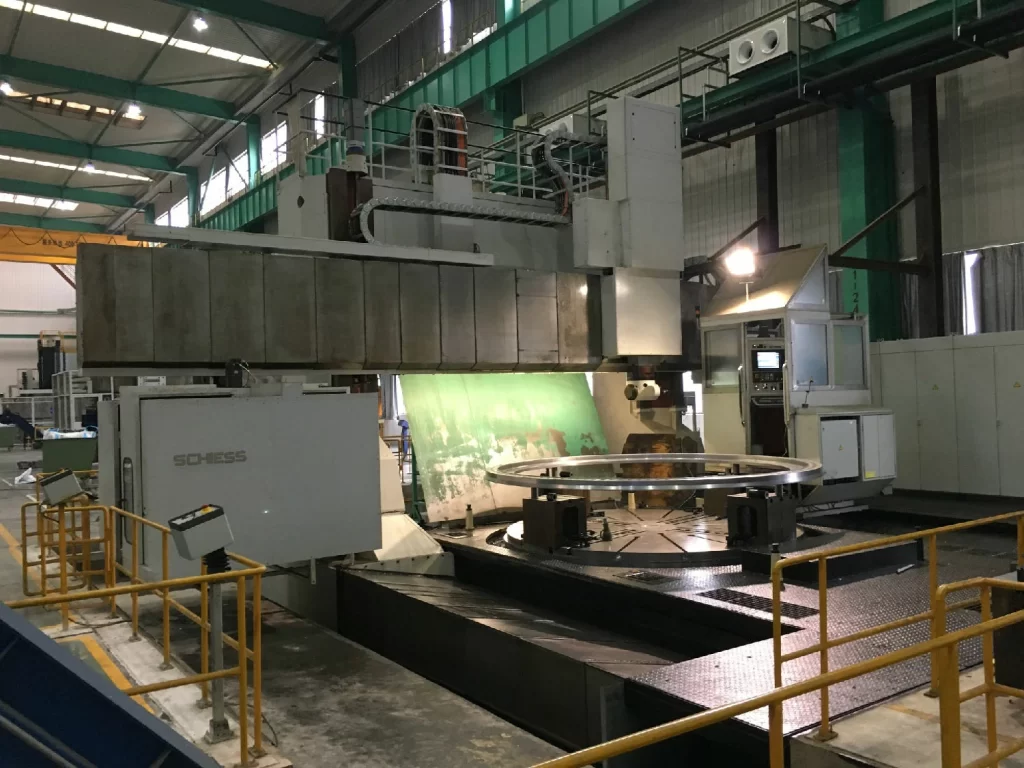
While both processes remove metal to create cylindrical shapes, selecting the incorrect one for your specific component can result in tolerance issues, deformation, or unnecessary costs. Here is a breakdown of how we determine which machine is best suited for your project.
The single biggest factor in large-scale machining is gravity.
In a standard horizontal lathe, the workpiece is clamped at one end (chuck) and supported at the other (tailstock), often with steady rests in the middle. For a long, slender part like a ship’s propeller shaft, this is ideal. However, if you try to spin a massive, heavy ring horizontally, gravity pulls the suspended weight downward. This causes the part to "sag" or ovalize while it spins, making it nearly impossible to hold tight circular tolerances.
This is where the Vertical Boring Mill (VBM)—often called a Vertical Turret Lathe (VTL)—shines.
On a vertical boring mill, the workpiece sits on a rotary table that spins like a potter’s wheel. The cutting tool descends from a gantry above.
Best Applications:
Large Flanges & Rings: Wind tower flanges, bearing rings, and slew bearings.
Heavy, Short Cylinders: Turbine housings, pump casings, and valves.
Asymmetrical Parts: Heavy parts that are difficult to balance horizontally.
The Advantages:
Eliminating Sag: Because the part rests flat on the table, gravity works with the clamping system, not against it. The part maintains its natural shape, allowing for superior roundness and flatness.
Easier Loading: Loading a 40-ton casing onto a horizontal lathe is a rigging nightmare. Loading it onto a vertical table with an overhead crane is safer and faster.
Massive Capacity: At Openex, our large-scale vertical boring capabilities allow us to machine diameters that would be impossible on a horizontal lathe.
While vertical mills handle the wide and heavy, Heavy Duty Horizontal Lathes handle the long and slender.
Best Applications:
Propeller Shafts: For the marine industry.
Rollers: For paper and steel mills.
Tie Rods & Columns: For heavy presses.
The Advantages:
| Feature | Vertical Boring (VTL/VBM) | Horizontal Turning |
| Primary Part Shape | Disc, Ring, Short Cylinder | Shaft, Tube, Long Roller |
| Gravity Effect | Stabilizes the part (Safe) | Can cause sagging (Requires support) |
| Clamping Pressure | Lower (Gravity helps hold it) | Higher (Must fight gravity/centrifugal force) |
| Ideal Industries | Wind Energy, Hydro Power, Oil & Gas | Marine, Paper & Pulp, Steel Mills |
Many smaller machine shops only have one type of machine. If they only have a horizontal lathe, they will try to force your large ring onto it, risking quality.
At Openex, we operate as a true one-stop shop. Our facility is equipped with both massive floor-type boring mills and heavy-duty horizontal lathes, alongside our fabrication and welding divisions.
We analyze your drawing, calculate the weight and dimensions, and route your part to the machine that ensures the tightest tolerances and the most efficient cycle time.
Do you have an oversized project requiring precision machining?
Don't let gravity ruin your tolerances. Contact Openex today for a technical review and a competitive quote.
At Openex Metal Fab, we believe that empowering our clients to tackle the most ambitious engineering projects starts with investing in foundational manufacturing technology. That’s why we are proud to announce a significant expansion of our heavy-machining capabilities with the acquisition and commissioning of a state-of-the-art, gantry-type 5-Axis CNC Milling and Turning Center from BYJC. This "mega machine" is a game-changer for industries that demand precision on a monumental scale.

This strategic addition is far more than just another piece of equipment; it is a testament to our commitment to providing comprehensive, large-scale metal fabrication solutions and solidifying our position as a leading partner for heavy industrial fabrication.
Designed to handle the most challenging and oversized components, this machine solves critical pain points in large-part manufacturing. Its specifications speak to its unparalleled capacity:
Massive Work Envelope & Capacity: A fixed table length of 20 meters (65.6 ft), a rotary table diameter of 10.5 meters (34.4 ft), and an astounding maximum load capacity of 300 metric tons. This allows us to secure and process entire sections of mining machinery, massive energy sector components, and large-scale capital equipment frames in one location.
Revolutionary 5-Face Machining in a Single Setup: The machine’s true innovation lies in its integrated 5-axis simultaneous milling and turning capabilities. Traditionally, colossal parts require multiple moves between different machines for milling, boring, and turning operations. Each move introduces potential alignment errors, increases handling time and risk, and extends lead times.
Our Solution: With this mill-turn center, we can complete roughing and finishing operations on up to five faces of a part in a single clamping. This eliminates cumulative errors, guarantees superior dimensional integrity and positional accuracy, and dramatically accelerates project timelines.
Unmatched Stability & Precision: Engineered for heavy-duty machining, the machine’s robust construction ensures exceptional vibration damping and thermal stability. This translates to finer surface finishes, tighter tolerances, and reliable, repeatable performance even during aggressive material removal on tough alloys.
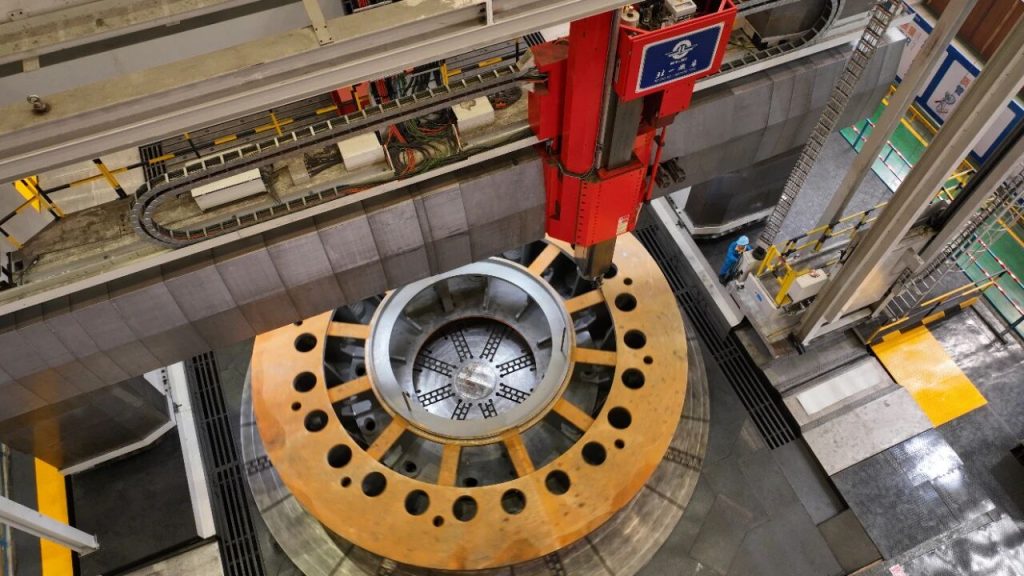
This machine is engineered for sectors where size, complexity, and reliability are non-negotiable:
Energy (Wind, Hydro, Nuclear): Manufacturing large gearbox housings, turbine hubs, and reactor components.
Heavy Engineering & Mining: Producing giant structural frames, base plates, and slewing rings for excavators and draglines.
Capital Equipment: Fabricating critical components for presses, machine tool bodies, and other large industrial systems.
By consolidating multi-step processes, we reduce supply chain complexity for our clients, ensure higher quality, and provide a faster, more secure path from design to delivery.
The introduction of the BYJC mill-turn center doesn't operate in isolation. It synergizes with our existing world-class equipment roster to create a true one-stop manufacturing hub. Our capability matrix includes:
Cutting & Welding: 100+ advanced laser cutters and 100+ welding systems for precision preparation.

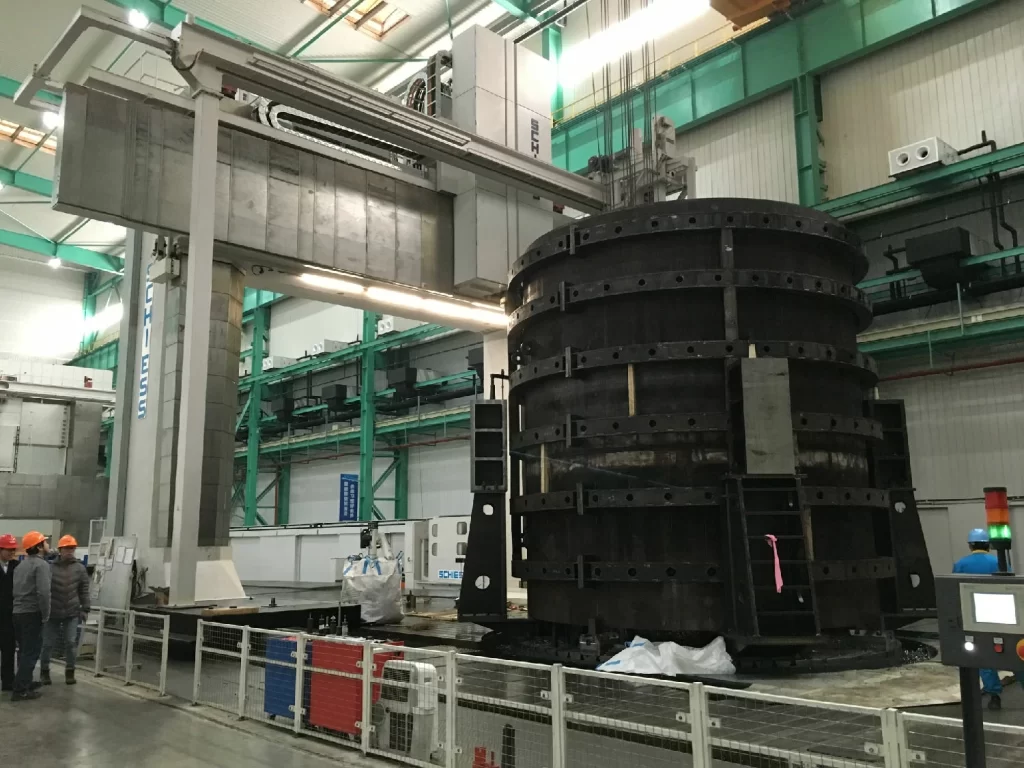
Heavy Machining Fleet: Multiple large-scale floor-type boring mills, deep-hole drilling units, and a celebrated German-made SCHIESS VGM6 double-column milling center—one of the world's largest—with 7-axis control for ultra-complex geometries in aerospace and power generation.
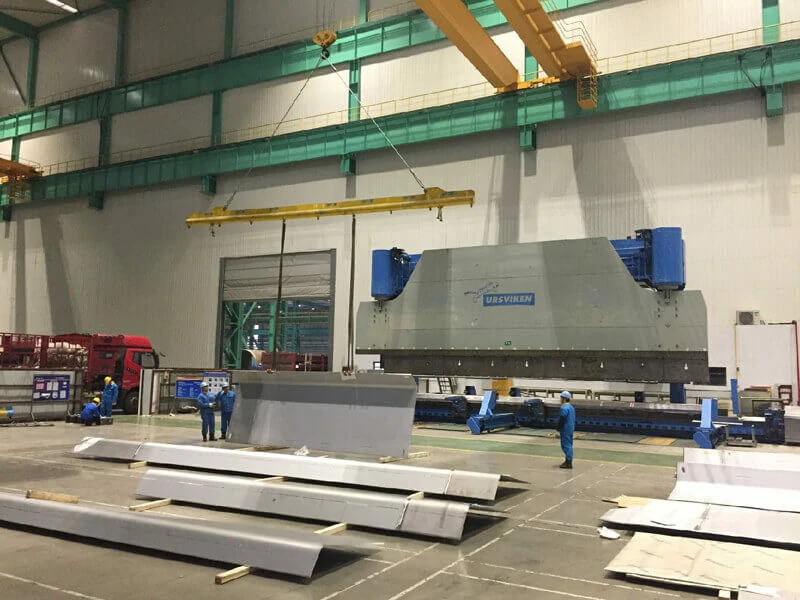
Forming & Bending: A range from Swedish URSVIKEN 3000-ton CNC press brakes to automated TRUMPF bending cells that enable 24/7, lights-out production for high-volume precision parts.
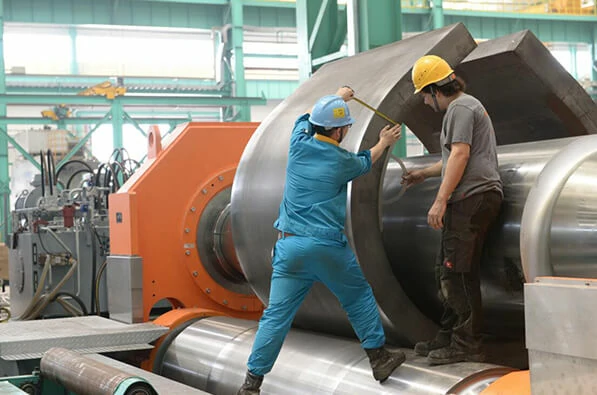
Rolling & Pressing: Swedish HÄUSLER plate rolls capable of hot-rolling 300mm thick steel and our in-house designed and built 5000-ton press showcasing our custom fabrication prowess.
This integrated ecosystem allows Openex to manage a project from raw plate and forging through final precision machining and quality control, offering unparalleled supply chain security, quality consistency, and project management efficiency.
At Openex Metal Fab, we are more than a fabricator; we are a strategic manufacturing partner. The investment in this colossal 5-axis CNC technology reflects our forward-thinking approach:
Anticipating Market Needs: We are proactively building capacity for the trend toward larger, more integrated, and more reliable industrial equipment.
Driving Manufacturing Excellence: We leverage cutting-edge technology not just for capacity, but to pioneer smarter, more efficient manufacturing methodologies for our clients.
Empowering Client R&D: Our capabilities allow design engineers to push boundaries, knowing that fabrication constraints for massive, high-precision parts can be overcome.
Are you designing the next generation of heavy machinery or facing fabrication challenges with oversized, complex components? Let Openex Metal Fab’s expanded capabilities be your solution.
Contact our engineering and sales team today to discuss how our new BYJC 5-Axis Mill-Turn Center and integrated manufacturing ecosystem can bring precision, efficiency, and reliability to your most demanding projects.
Municipal water treatment plants are the unsung heroes guarding public health and our environment. But for the engineering firms building them, the pressure is immense. Harsh conditions demand flawless equipment, and public project timelines are set in stone. There's no room for delays.
Success doesn't just come from great design—it comes from finding a manufacturing partner who can reliably turn complex blueprints into finished parts, on time, every time.
That was the exact challenge a leading environmental tech company brought to us. They needed a batch of heavy-duty, custom parts for a new town water plant. Their experience? Juggling multiple shops for cutting, bending, and welding led to scheduling headaches and inconsistent quality.
They needed more than a vendor. They needed a single-source solution that was Fast, Hassle-Free, and Cost-Effective.
Here’s the story of how our One-Stop Fabrication Service turned this high-pressure project into a model of efficiency, precision, and partnership.
The client's needs hit on all the classic pain points of modern manufacturing:
Zero-Compromise Quality: Parts required special steel to handle constant water pressure and chemicals. Weld quality was critical—future leaks were not an option.
Complex Geometry: Designs had intricate cuts, precise bevels for strong welds, and heavy-gauge bends. Tolerances had to be tight for easy on-site assembly.
The Clock Was Ticking: The delivery window was locked to the main construction schedule. The old way of using multiple vendors almost guaranteed delays.
Their message was clear: "We need zero defects, and we need them fast."
We didn't just send a quote. We proposed a tailor-made manufacturing strategy. By using our in-house, end-to-end capabilities and proactive project management, we cut out the "waiting game" and uncertainty between steps.
The Typical Problem: Raw steel plate has internal stress. Cutting and welding stressed metal makes it warp, leading to assembly nightmares and weak spots in large tanks and ducts.
How We Handle It: We start with our heavy-duty leveling lines. Our process doesn't just flatten the plate—it actively removes internal stress. This crucial first step creates a stable foundation for everything that follows, preventing warping from the very beginning.
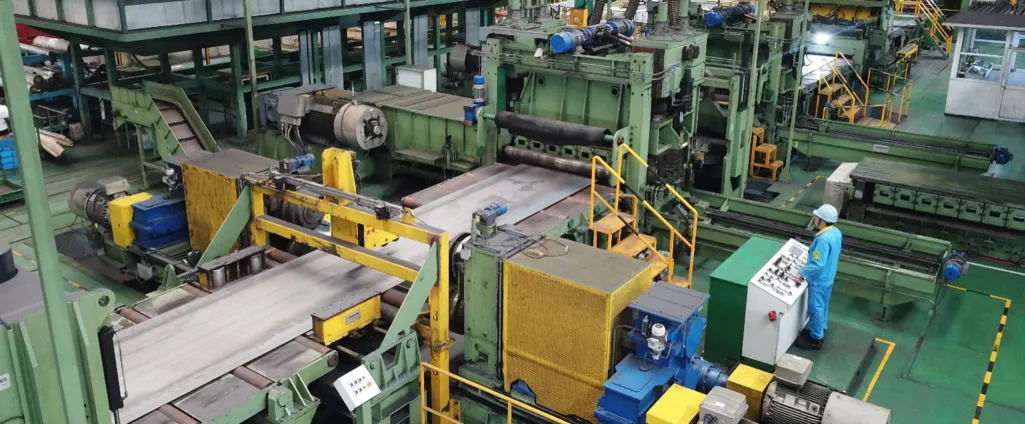
The Typical Problem: Old-school flame cutting leaves rough, uneven edges with a damaged "heat-affected zone," requiring expensive extra grinding.
How We Handle It: We use high-power fiber laser cutters. They slice through thick plate with millimeter precision, leaving clean, smooth edges ready for welding or bending. Our smart nesting software also maximizes material use, which directly lowers the client's material costs.
This step is the unsung hero of a strong final product.
The Typical Problem: To make a full-strength "full-penetration" weld, you need a perfectly shaped edge (bevel). Hand-grinding this is slow and inconsistent.
How We Handle It: We use automated edge beveling machines. They mill the weld edges to exact angles, creating the perfect seam for welding. This attention to detail is why our weld failure rates are so low, ensuring long-term, reliable performance.
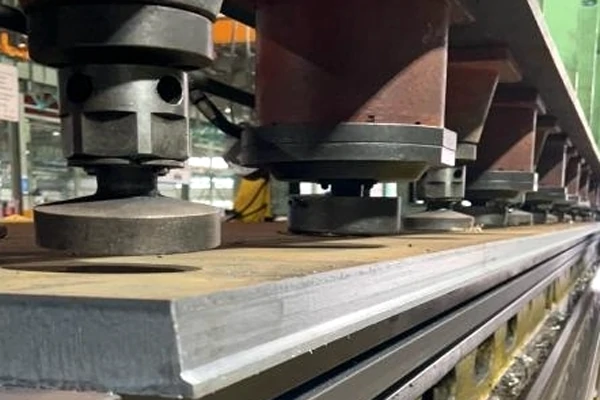
The Typical Problem: Bending thick plates takes a huge force, and you have to perfectly calculate "springback"—how much the metal flexes back after bending. Get it wrong, and parts won't fit together.
How We Handle It: Our CNC press brakes are programmed by experienced technicians who account for springback. We create complex shapes in one press, ensuring every part is consistent and will **fit together seamlessly on site**, with no costly adjustments needed.
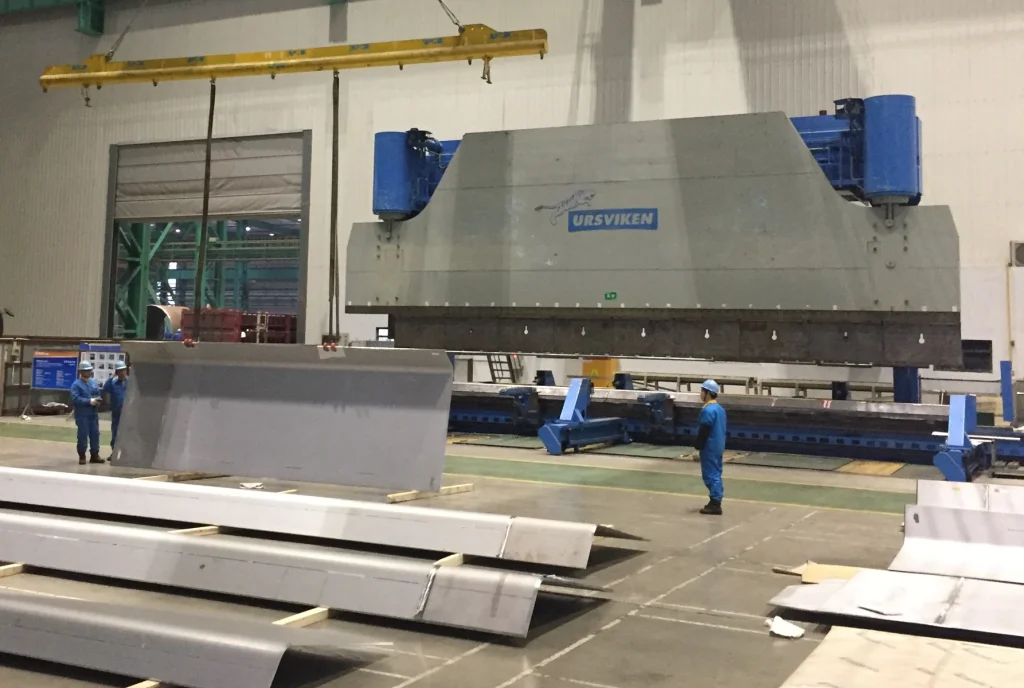
The Typical Problem: Welding generates intense heat, which can distort and twist parts out of shape.
How We Handle It: Our certified welding team follows strict procedures. By carefully controlling the heat and using the right sequence and fixtures, we minimize distortion. All critical welds are checked with Non-Destructive Testing (NDT), guaranteeing every assembly is strong, sealed, and built to last.
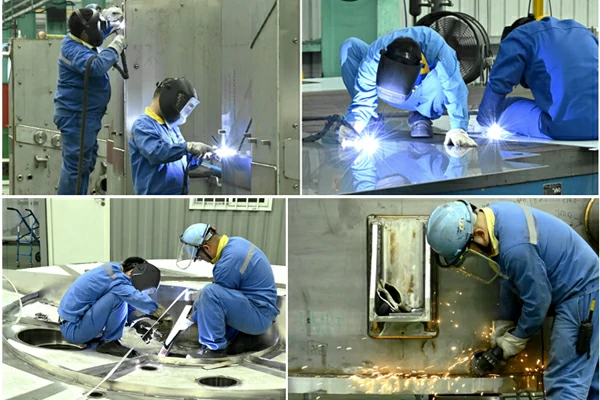
Great equipment is essential, but what really sets us apart is our proactive mindset and partnership approach.
Proactive Design for Manufacturability (DFM): Before we cut anything, our engineers reviewed the client's drawings. We suggested a smart tweak: changing a multi-piece welded assembly into a single, bent component. This simple DFM suggestion cut welding time by about 15%, reducing cost, shortening the schedule, and making the part stronger by eliminating potential leak points.
Dynamic, Just-in-Time Scheduling: We managed the workflow as one continuous stream. Using real-time tracking, we made sure the next station was ready as soon as a part finished the previous step. This "just-in-time" flow within our own walls slashed wait times and work-in-progress, speeding up the entire project.
The benefits of integrated manufacturing were clear and measurable:
Timeline: All parts were delivered 3 days ahead of the tough deadline.
Quality: We achieved a 100% first-pass yield—no rework needed, passing all inspections.
Total Cost Efficiency: By keeping the entire process under one roof, the client saved an estimated 20% in hidden logistics, management, and coordination costs.
Here’s what the client’s Project Manager had to say:
"We came for your technical capability, but we'll stay for your process intelligence. You didn't just fabricate to print; you acted as a true extension of our team, owning the solution. That level of integrated control and forward thinking is exactly what we need for our most critical city projects."
This successful partnership has now evolved into a long-term strategic agreement.
In today's world of unpredictable supply chains, managing multiple vendors for one product is a major risk. This case shows that a vertically integrated One-Stop Service isn't just a convenience—it's a real competitive advantage in managing risk, speeding up projects, and controlling total cost.
We handle the complex symphony of precision manufacturing, so you can focus on the big picture.
Stop juggling multiple suppliers. Start working with a true partner.
If your next project involves precision metal fabrication, tight deadlines, and non-negotiable quality—whether it's for water treatment, environmental tech, or industrial equipment—we're ready to help.
📩 Start a Conversation Today:
Email Your Drawings for a free DFM Review & Quote: sales3@openex.com.cn
Speak Directly with a Project Engineer: +86 186 5928 0806
Partner with Openex Metalfab. Where Precision Meets Process, and Your Success is Delivered.
In today’s global industrial landscape, green manufacturing and environmental governance are no longer optional—they are mandatory. The real effectiveness of pollution control systems depends not only on advanced processes, but on something far less visible: the precision, durability, and reliability of metal structural components.
Recently, several fully loaded trucks departed Openex Metalfab’s production facility, carrying custom-manufactured carbon steel and stainless steel components for a large-scale environmental engineering project. This delivery marked more than the completion of an order—it showcased Openex Metalfab’s core strength in custom metal fabrication and its role as a behind-the-scenes force supporting global environmental infrastructure.
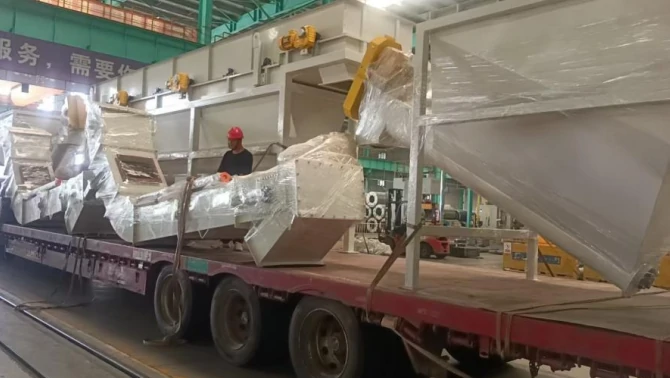
Environmental protection equipment—such as wastewater treatment tanks, exhaust gas adsorption towers, sludge drying systems, and chemical processing vessels—operates under some of the harshest industrial conditions imaginable.
These systems demand metal components that can withstand:
In this project, the client required fully customized, non-standard components, manufactured strictly according to proprietary engineering drawings.
This created three non-negotiable requirements:
To meet these demands, Openex Metalfab assembled a dedicated project team and executed a precision-driven, full-process manufacturing strategy.
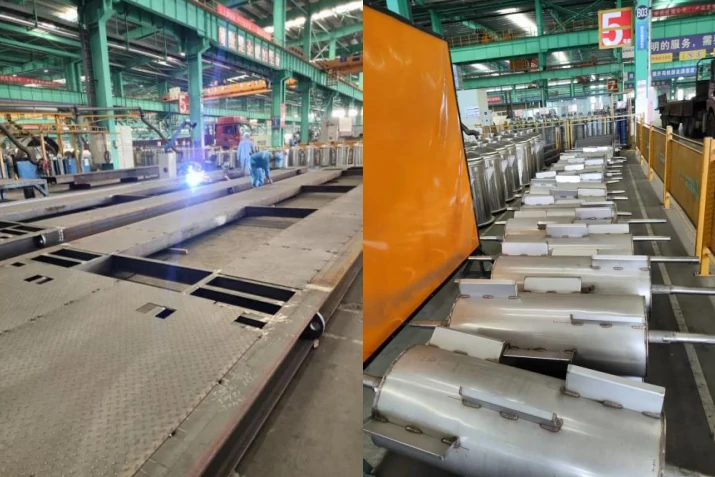
Many people think metal fabrication is simply cutting and welding. At Openex Metalfab, it is a disciplined engineering system. For this environmental project, we implemented a six-stage quality-controlled manufacturing workflow.
“Build-to-print” does not mean blind execution.
Our engineering team conducted a Design for Manufacturability (DFM) review using professional 3D modeling software to simulate:
Where improvement was possible, we proactively advised the client.
Example:
For a stainless steel connector with a tight R-angle radius, we recommended a minor bend-radius adjustment. This eliminated the risk of micro-cracking during forming while preserving functional performance—significantly improving long-term durability.
Quality begins with raw materials.
All incoming carbon steel and stainless steel plates undergo PMI (Positive Material Identification) spectral analysis to verify chemical composition. This ensures full compliance with specified grades and prevents material substitution risks.
We also perform precision leveling to eliminate internal stress, creating a stable foundation for high-accuracy cutting and forming.
Openex Metalfab uses high-power fiber laser cutting systems, delivering:
Key advantages include:
This approach reduces cost while aligning with sustainability and resource-efficiency goals.
Metal has memory—and controlling springback is critical.
This project involved complex geometries with multiple bends and irregular contours. Our CNC press brake centers, operated by highly experienced technicians, applied precise springback compensation.
The result: sharp edges, smooth lines, and perfect alignment with design intent.
For environmental equipment handling liquids and gases, weld integrity determines system safety.
Openex Metalfab employs certified welders with extensive experience in pressure-bearing structures.
All critical welds undergo NDT (Non-Destructive Testing) to confirm:
Before shipment:
Custom wooden crates and shock-resistant packaging ensure damage-free delivery, even under long-distance transportation conditions.
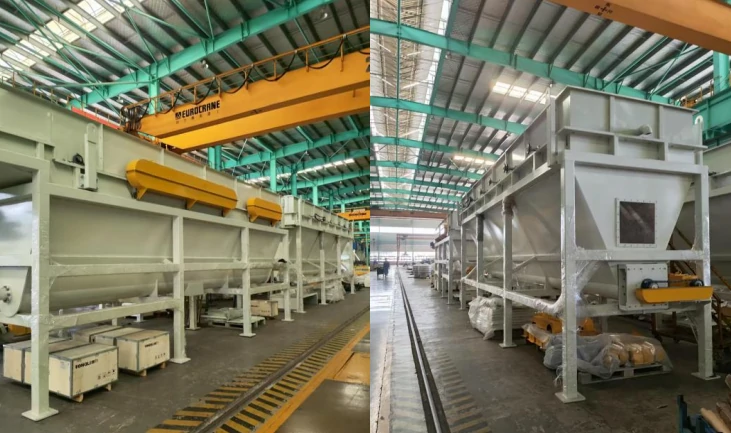
This successful delivery represents just one example of Openex Metalfab’s daily operations. Our reliability is built on three core strengths.
We operate multi-kilowatt fiber laser cutting machines, heavy-duty CNC press brakes, and automated welding systems—allowing full in-house production from raw plate to finished component.
Our flexible production system supports single-piece prototyping, small-batch trials, and scalable mass production—making it ideal for the environmental, energy, and industrial equipment sectors.
We deliver more than parts. Our concierge-style service includes:
As the world accelerates toward carbon neutrality and sustainable industrialization, demand for reliable environmental equipment continues to grow.
Openex Metalfab remains committed to precision, efficiency, and long-term reliability, transforming complex drawings into dependable industrial solutions.
If you need carbon steel or stainless steel custom-fabricated components for environmental protection equipment, engineering machinery, or non-standard assemblies—
Openex Metalfab is ready to support your project.
📩 Send us your drawings or requirements today.
👉 Contact us now to start your high-efficiency manufacturing journey
📞 Phone: +86 186 5928 0806
📧 Email: sales3@openex.com.cn
Leave to us—so you can focus on growing your business.
This project demonstrates how advanced materials engineering and precision off-site fabrication deliver faster, lighter, and more sustainable urban infrastructure solutions.
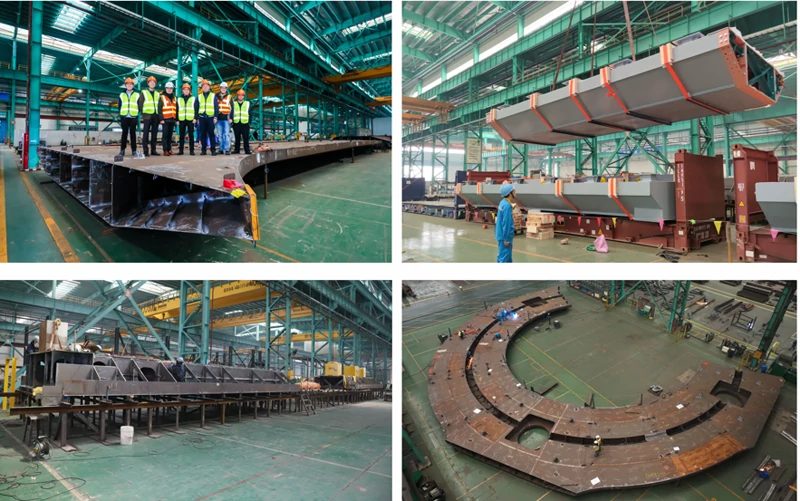
As cities accelerate urban renewal and sustainable infrastructure programs, pedestrian bridges are evolving from simple transport links into engineered landmarks. At the same time, municipalities and EPC contractors face increasing pressure to reduce structural weight, construction time, and carbon emissions.
Traditional steel bridge construction often struggles with:
The solution lies in a proven strategy: lightweight structural design enabled by ultra-high-strength steel (UHSS) combined with off-site precision fabrication.
We are pleased to announce the successful shipment of S960 ultra-high-strength steel pedestrian bridge components, marking a key milestone in advanced steel bridge manufacturing and sustainable urban construction.
S960 is a quenched and tempered structural steel with a minimum yield strength of 960 MPa, making it one of the strongest steels currently used in civil infrastructure projects.
For comparison:
This means S960 offers three to four times the strength of conventional structural steels while maintaining excellent toughness and fatigue resistance.
The use of S960 was driven by detailed engineering analysis and lifecycle optimization:
Ultra-high-strength steel delivers outstanding performance, but it also presents serious fabrication challenges, including springback during forming, weld crack sensitivity, and heat-affected zone (HAZ) softening.
Our engineering and production teams implemented a controlled, validated manufacturing process to ensure quality and repeatability.
Challenge: S960 steel is highly sensitive to heat input during cutting. Excessive thermal energy can reduce edge strength.
Solution: High-definition plasma cutting and multi-kilowatt fiber laser cutting systems. Through parameter optimization, cutting speed control, and gas flow tuning, the HAZ width was minimized, preserving base metal mechanical properties.
Challenge: High yield strength causes severe springback and requires high forming forces.
Solution: Large-capacity CNC press brakes and plate rolling machines, paired with proprietary springback compensation data derived from material testing. This approach ensured first-pass accuracy and precise final geometries for complex bridge components.
Challenge: S960 steel is susceptible to hydrogen-induced cold cracking and HAZ softening if welding parameters are not tightly controlled.
Solution: Our welding procedures were developed and validated according to international standards:
All welding work was performed by AWS D1.1 certified welders.
To ensure decades of service life in outdoor environments:
The success of this S960 pedestrian bridge project reflects our integrated manufacturing capabilities.
Production Equipment
Quality Assurance and Standards
By combining S960 ultra-high-strength steel with factory prefabrication, the project achieved measurable benefits:
This project confirms that S960 ultra-high-strength steel is a viable, efficient, and sustainable solution for modern pedestrian bridges and urban infrastructure.
As infrastructure owners and contractors increasingly prioritize lighter structures, faster delivery, and lower environmental impact, the combination of high-performance materials, precision fabrication, and modular construction will define the future of steel bridge engineering.
We are ready to support your next project.
We provide end-to-end fabrication solutions for infrastructure, industrial, and special steel structures, including:
Have drawings? Let’s talk.
📧 RFQ & Technical Inquiries: [sales3@openex.com.cn]
Contact us today to achieve lighter, stronger, and more sustainable steel structures.
Recently, our company completed the prefabrication of large storage tank components for an overseas export project.
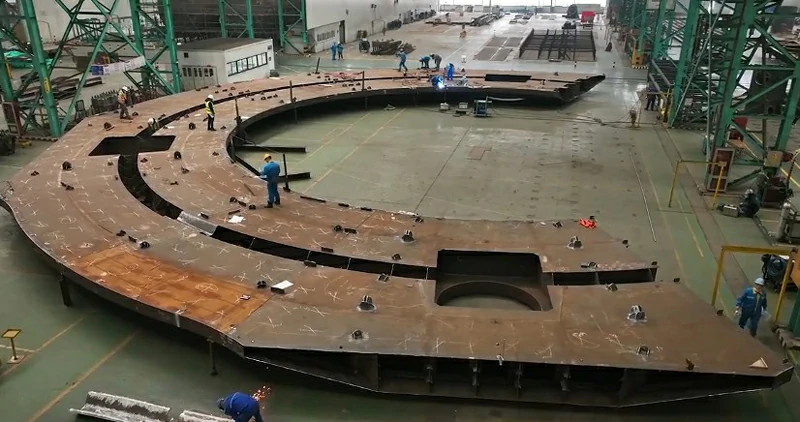
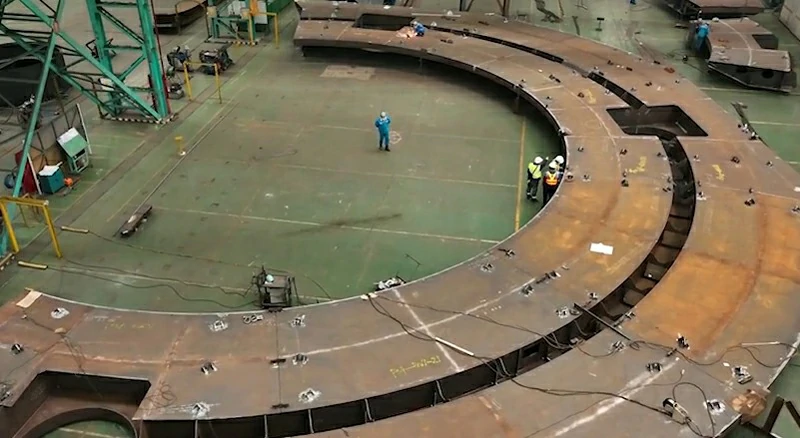
The most critical technical challenge—the precise forming of a spherical segmented tank head with a diameter exceeding 20 meters — was overcome through our independently developed process innovation.
This achievement not only demonstrates our ability to solve highly complex engineering problems but also reflects our continuous transformation from traditional manufacturing toward advanced and intelligent manufacturing solutions.
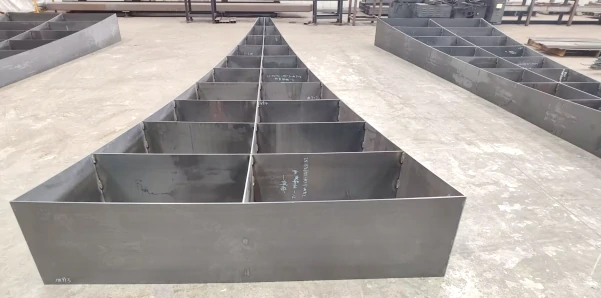
During the initial trial phase, the project adopted the industry-standard approach of contour fixtures combined with stiffener welding. After precision CNC cutting, the team observed that while areas reinforced with stiffeners retained the designed geometry, the tail sections of the fan-shaped plates experienced significant springback.
This deformation distorted the spherical curvature and caused flatness deviations beyond acceptable tolerances.
Further analysis revealed the root cause: traditional forming methods fundamentally work against the natural internal stress behavior of the material. By relying on external force to suppress deformation instead of guiding the material to form naturally, these methods often produce unstable results and may negatively affect long-term structural performance.
To address this long-standing industry challenge, our engineering team developed an innovative Multi-Pass Pre-Bending Forming Process, marking a fundamental shift from passive correction to proactive guidance.
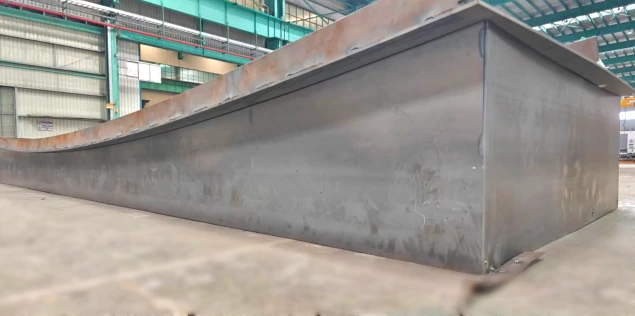
After precision cutting and before final forming, the plates undergo multiple controlled, progressive bending steps. Carefully calculated bending parameters allow internal stress to be released and redistributed in advance, creating a controlled “pre-deformation memory.”
As a result, when the plate enters the contour-forming stage, it naturally conforms to the target spherical surface instead of resisting external forces.
The key innovation lies in the second step—preventing deformation before it occurs, rather than correcting it afterward.
Our technical team integrates expertise in material science, mechanical engineering, and welding technology. With over 15 years of experience in large pressure vessel fabrication, the team is capable of solving complex challenges through coordinated, multi-dimensional engineering analysis.
For this innovative process, a real-time strain monitoring system was introduced to digitally track stress evolution during forming, ensuring complete data traceability and verified product quality.
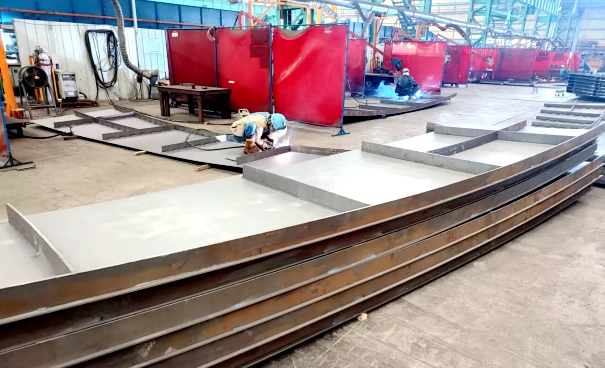
The first spherical tank head produced using the new process passed 3D inspection on the first attempt. The average deviation from the design model was less than 2 mm, earning high recognition from the supervising authority.
“This solution addresses the problem at the material level and reflects a deep foundation in manufacturing expertise.”
This breakthrough resulted in a proprietary solution for progressive forming of large, thin-walled curved components, supported by multiple patent applications.
The process has been fully standardized and documented in the Forming Specification for Large Complex Curved Structures, establishing a complete technical system from theoretical calculation to operational execution.
Based on this technological advantage, the company has received multiple technical inquiries from international energy projects, with two key projects already entering the agreement phase. This capability has become a critical competitive advantage in the global market.
From problem identification to process innovation, and from localized optimization to a systematic solution, this project demonstrates our commitment to deep technical understanding and continuous innovation.
By respecting material behavior and guiding it through intelligent process design, we achieve superior manufacturing results while improving efficiency, quality, and long-term reliability.
Looking ahead, we will continue to drive progress through process innovation and deliver high-quality, reliable large-scale equipment fabrication solutions to customers worldwide.
If your project involves large storage tanks, spherical tank heads, or complex curved steel structures, our engineering team is ready to support you with proven, innovative forming solutions.
From concept validation and process design to precision fabrication and export delivery, we help EPC contractors, equipment manufacturers, and energy companies reduce risk, improve quality, and accelerate project schedules.
Contact us today to discuss your technical requirements or request a customized manufacturing solution. Our experts will respond promptly with professional, practical recommendations tailored to your project.
Request Technical Consultation
Case Study: Commercial Vehicle 304 Brushed Stainless Steel Toolbox Project

Image: Custom 304 brushed stainless steel toolboxes manufactured by Openex for commercial vehicle applications.
In the demanding world of commercial vehicle accessories, quality and durability are non-negotiable. Openex recently delivered a critical project: custom 304 Brushed Stainless Steel Toolboxes for a specialized vehicle manufacturer. This project showcases our expertise in precision metal fabrication and our commitment to meeting stringent client specifications with integrated manufacturing solutions.
The project presented specific technical requirements:
Material Specification: Premium 304 stainless steel for superior corrosion resistance
Surface Finish: A consistent brushed (hairline) finish that offered both a professional appearance and enhanced resistance to scratches and wear
Production Challenges: Achieving uniform texture across all components, ensuring long-term durability in rugged environments, and maintaining tight delivery schedules
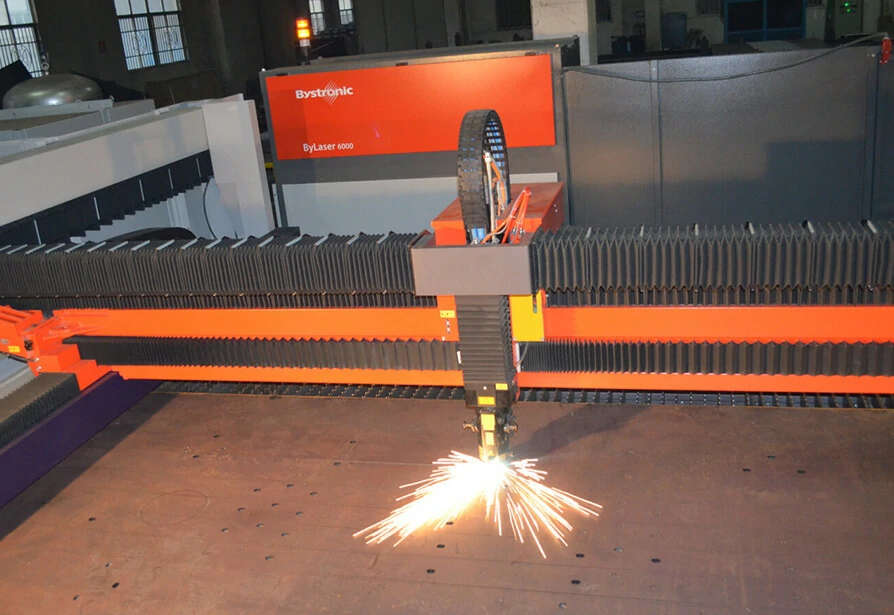
Image: High-precision laser cutting at Openex facility.
Our systematic approach ensured quality at every stage:
Utilizing advanced laser cutting technology, we achieved exact dimensional accuracy for each component. CNC press braking then created precise, consistent bends for structural integrity and clean aesthetics.

Image: Automated brushing process for consistent surface texture.
We employed automated brushing equipment to create a uniform satin finish. Our refined multi-stage process—including progressive abrasion and precision polishing—ensured a deep, even grain pattern with excellent scratch resistance.
Using TIG welding techniques, we created strong, clean joints. Meticulous grinding and finishing ensured seamless integration of welded areas with the brushed surface.
Upon delivery and inspection, the client reported:
"Openex's fabrication capabilities and manufacturing quality exceeded our expectations. The attention to detail perfectly matched our specifications, and we plan to continue our partnership for future projects."
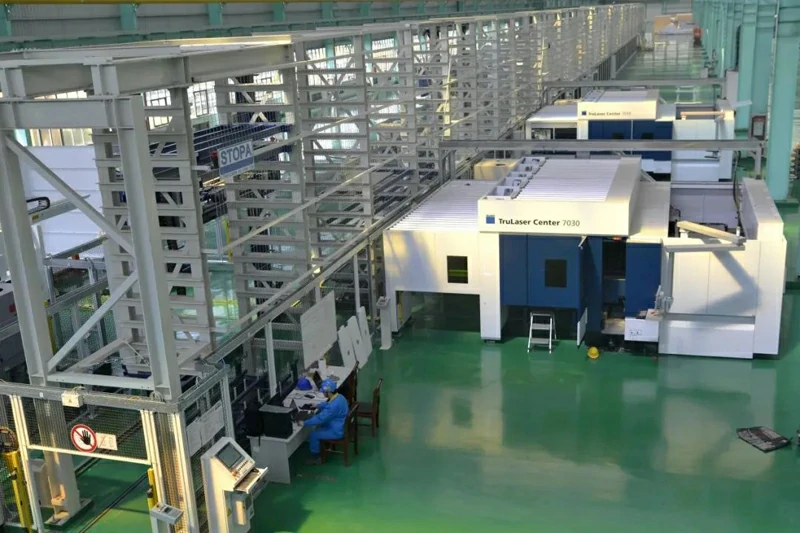
Image: Openex's advanced manufacturing facility equipped for comprehensive metal fabrication.
This project demonstrates Openex's core strengths:
Advanced Manufacturing Infrastructure - Modern equipment for cutting, forming, welding, and finishing
Technical Expertise - Skilled engineers solving complex fabrication challenges
Integrated Quality Control - Rigorous inspection protocols throughout production
Comprehensive Service Model - True one-stop service from design to delivery
Project Summary:
Openex recently delivered a custom 304 Brushed Stainless Steel Toolbox project for a commercial vehicle client. Facing high standards for material and finish, plus production challenges, we executed efficiently and earned strong client approval.
The project required 304 stainless steel with a brushed finish that balanced aesthetics with rugged durability. Leveraging our advanced cutting, forming, and brushing equipment, and by refining multi-stage polishing techniques, Openex overcame technical hurdles related to grain uniformity and scratch resistance, ensuring top-tier quality.
The client confirmed our capabilities exceeded expectations. This project validates our efficient one-stop service and underscores our comprehensive expertise in high-end stainless steel processing.
Ready to discuss your custom metal fabrication project?
📞 Contact Openex today to leverage our expertise in precision manufacturing. Let us help you create durable, high-quality products that meet your exact specifications.
Project Background: A Technical Bottleneck and an Urgent Request
Technical Challenge: The Leap from "Can Process" to "Precision Control"
Project Significance: From Product Delivery to Methodology Output
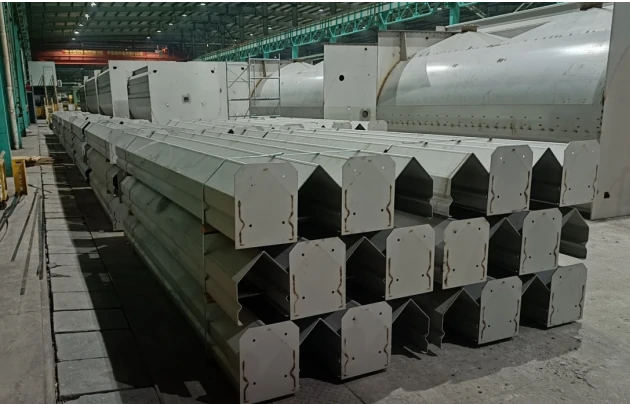
Recently, Openex Machinery successfully delivered a batch of nearly 600 critical U-rib bending components to a major bridge manufacturer. Leveraging a systematic process solution, we achieved high-quality and efficient service, further solidifying our brand reputation in the field of precision structural component fabrication.
The U-ribs in this order, with a plate thickness of 8mm and a length of 12 meters, required multiple precision manufacturing steps, including slitting, leveling, cutting, and bending. Initially, the bending process was handled by the client's subcontractor. However, severe "scythe bending" issues emerged during the cutting stage, leading to significant flange warping during subsequent bending, jeopardizing product quality and project timelines. At this critical juncture, the client turned to Openex Machinery for expert assistance.

This project presented far more stringent requirements compared to conventional U-rib processing methods:
Limitations of Traditional Process: The conventional method involves bending after edge planning of the raw material, with no need to consider hole position accuracy or flange control.
Technical Requirements for This Project: Precision round holes and specific cut-outs needed to be made after leveling, while simultaneously ensuring hole symmetry and preventing flange warping during the bending process. This placed extremely high demands on deformation control throughout the entire workflow.
This shift represented a technological leap from simple "processing capability" to sophisticated "precision control," presenting a comprehensive test of a company's systematic process planning, equipment accuracy, and process control capabilities.
Facing the dual challenges of correcting scythe bending and preventing flange warping, the Openex technical team moved beyond isolated fixes to implement a systematic re-engineering of the entire process:
* Implemented precision leveling and straightening of plates exhibiting scythe bending, eliminating the root cause of warping. * Employed customized straightening solutions to ensure straightness control over the full 12-meter length of the plates.
* Developed techniques to control hole position accuracy and cut-out geometry synchronously during the bending operation. * Achieved an efficient "one-step forming, multi-parameter compliance" processing model. * Designed specialized tooling and positioning systems to guarantee hole symmetry throughout the bending process.
* Established an integrated task force with collaborative advancement between sales, engineering, and production departments. * Provided one-stop, full-process detailed service with strict quality control at every stage. * Implemented a full-process data monitoring and feedback mechanism to ensure process stability.
Our team redesigned the complete process route from raw material preparation to final forming, with key enhancements in:
We established a complete system for deformation prediction and control, featuring: * Deformation pre-compensation technology based on material characteristics. * Real-time monitoring and feedback adjustment mechanisms. * Multi-stage deformation accumulation control strategies.
* Completed on-time delivery of all ~600 U-rib components. * Achieved a product qualification rate of 99.8%, significantly exceeding industry averages. * Maintained hole position accuracy within ±0.5mm, fully meeting design specifications.
* Recovered time lost due to the subcontractor's technical issues, keeping the client's project on schedule. * Substantially reduced the client's overall costs by minimizing rework and scrap rates. * Provided the client with a reliable technical solution reference for future similar structural component projects.

This successful technical overcoming technical hurdles is not just another instance of high-quality product delivery by Openex Machinery. It represents the successful application of a systematic process solution we developed for complex U-rib bending.
This breakthrough at the "methodology" level carries significant implications:
* Sets a new technical benchmark for processing high-difficulty U-rib structural components in the bridge construction industry. * Provides a replicable and scalable systematic process solution. * Promotes industry upgrade from experience-based processing to precision-controlled manufacturing.
* Showcases our core capability to respond to market demands through process innovation. * Embodies our service philosophy of empowering client development through precision manufacturing. * Strengthens our position as a technology leader in specialty structural component fabrication.
This project once again demonstrated Openex Machinery's comprehensive strengths in precision structural component processing:
Systematic Problem-Solving Ability: Addressing root causes from a holistic process system perspective, not just applying point fixes.
Cross-Departmental Synergy Efficiency: Rapid project advancement through effective collaboration between sales, engineering, and production.
Technical R&D and Process Innovation Strength: Quickly developing effective solutions for specific technical challenges.
Full-Process Quality Control System: Meticulous management from raw material to finished product.
The successful delivery of these bridge U-rib bending components is a vivid demonstration of Openex Machinery's principle of "Technology as Foundation, Customer as Priority." We delivered not only high-quality products but also valuable process methodology, achieving true win-win development with our client.
Openex Machinery remains committed to the innovation and application of precision manufacturing technology. We are ready to provide high-value-added processing solutions for more clients across industries, jointly promoting the development of manufacturing towards higher quality and precision.
If you have requirements for complex structural component fabrication or need assistance overcoming technical challenges, please feel free to contact us. The expert team at Openex Machinery will provide one-stop service from process consultation to product delivery, empowering your project's success with systematic solutions.
Steel is the undisputed backbone of modern manufacturing, essential for everything from the skyscrapers defining our skylines to the machinery powering our economy. Its fabrication demands unwavering precision, immense strength, and a deep commitment to quality. In a highly competitive global market, what truly distinguishes one manufacturer? The answer is unwavering reliability. At Openex, we have built our reputation as a leading Reliable Steel Fabrication Supplier on this very principle. We consistently demonstrate how our blend of advanced technology and decades of hands-on experience sets a new industry benchmark.

The Openex Advantage: Built on a Foundation of Trust
Our company exemplifies how a focused commitment to core principles achieves global leadership. We consciously compete on value, not just price, prioritizing unmatched quality and service above all. This makes us the preferred partner for businesses worldwide, especially for projects where failure is not an option. We operate on the belief that every component we fabricate is a critical piece in our client's larger puzzle.
Our Core Strengths: The Pillars of Our Success
How has Openex cemented its leadership in such a competitive field? Our advantage stems from a powerful synergy between three core pillars: state-of-the-art technology, profound expertise, and a client-centric service model.
The Fusion of Experience and State-of-the-Art Technology
We have invested heavily in cutting-edge technology to ensure our fabrication capabilities meet modern demands. Our facility is equipped with high-powered laser and plasma cutters for amazing precision on thick plates, automated CNC press brakes for flawless bending, and robotic welding cells for consistent, high-strength welds.
However, we know superior technology alone is insufficient. Our team of highly trained engineers and technicians possesses years of invaluable experience. This expertise allows us to not only maximize the potential of our advanced tools but also to troubleshoot complex challenges, optimize designs for manufacturability, and guarantee every project meets exact client specifications. It is this powerful fusion of cutting-edge machinery and seasoned craftsmanship that truly sets us apart.
Seamless Transition from Prototype to Full Production
Managing multiple vendors for prototyping, fabrication, and finishing is a common, inefficient, and error-prone challenge for many clients. Openex eliminates this fragmentation with a seamless one-stop solution. We guide your design from prototype through full-scale production via a streamlined, continuous process. This allows you to move from initial concept to final product with a single, trusted partner, saving significant time, reducing costs, and simplifying your supply chain. Our rigorous quality control, implemented at every stage, ensures every production piece matches the high standard of your prototype.
Fabrications That Power Global Industries
The scope of our expertise is demonstrated by the vast range of custom-fabricated parts we deliver across diverse sectors. Each product showcases our engineering prowess and ability to tailor solutions for specific, demanding applications.
Mining & Engineering: For an industry demanding ultimate durability, we produce heavy-duty chassis, structural components for drill rigs, and custom guards for industrial machinery.
Oil & Gas: In a sector where reliability under extreme conditions is paramount, we fabricate high-pressure vessel hulls, large structural platforms, and pipe spools to the strictest safety standards.
Automotive & Heavy Vehicle: We manufacture critical components like custom truck chassis, specialized engine mountings, and structural parts for ground support equipment.
Energy: Our products are vital to the global energy sector, including massive wind turbine tower sections, foundational supports for power plants, and large-scale enclosures for generators.
Construction: We form the backbone of modern infrastructure, fabricating steel trusses, columns for high-rises, and bespoke architectural elements.
Leading the Steel Fabrication Industry's Evolution
The steel fabrication industry is undergoing a radical transformation, driven by technological innovation and global market demands. It is shifting from a traditional trade to a highly technical, precision-driven field where quality and efficiency are paramount. As a major player, Openex has not only adapted to these changes but has actively helped to define them.
Championing Digital Integration
Digitalization now touches every part of the fabrication process. Advanced software like 3D Modeling and Building Information Modeling (BIM) enables virtual prototyping long before any steel is cut. This minimizes costly errors, streamlines project management, and ensures flawless collaboration. A modern fabricator must excel within this digital ecosystem to remain competitive, and we do.
Automation & Robotics: Enhancing Precision and Safety
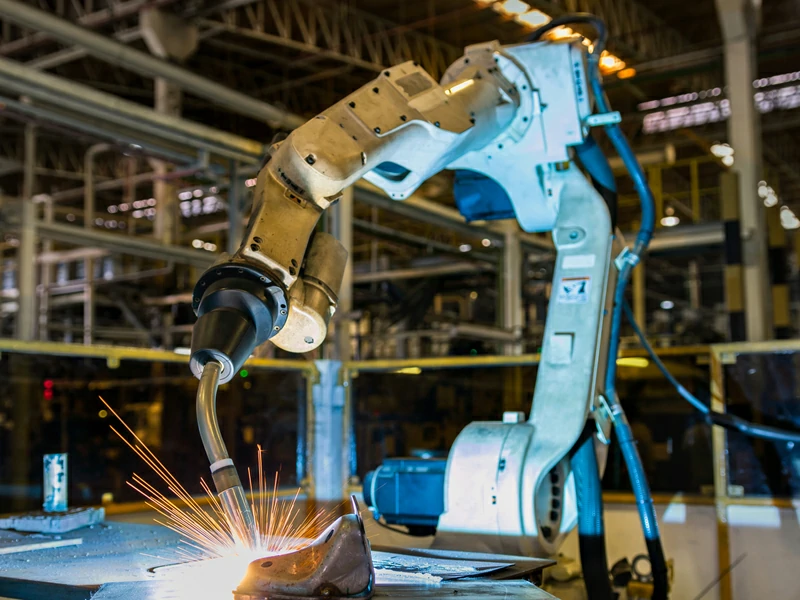
Automation is a game-changer. Robotic cutting and welding systems are now standard in our workflow, boosting production speed while achieving a level of precision and consistency unattainable manually. Crucially, these systems also perform the most hazardous tasks, significantly improving workplace safety for our team. We are a prime example of how trained technicians and advanced robotics can collaborate for superior outcomes.
Commitment to Material Innovation and Sustainability
Facing pressure to reduce environmental impact, we have adopted sustainable practices as a core tenet. We minimize material waste through advanced nesting software and actively recycle steel. The use of new, high-strength, lightweight alloys is also rising, which often reduces the total material required for a project. This trend is not just about being eco-friendly; it is about being smarter and more efficient.
Excelling in Globalized Supply Chains
In today's globalized economy, companies seek partners offering the ideal blend of technical expertise, scale, and cost-effectiveness. This has solidified the trend of outsourcing to global fabrication hubs. Countries with a robust manufacturing infrastructure and a commitment to quality, like China, are now key players. As a leading China-based Reliable Steel Fabrication supplier, Openex holds an unbeatable position, offering international clients a comprehensive, one-stop solution.
We have built our name on reliability, trust, and quality, with a proven ability to deliver even the most complex projects.
Contact our engineer at sales3@openex.com.cn today to discover our full capabilities and learn how we can help elevate your next project.