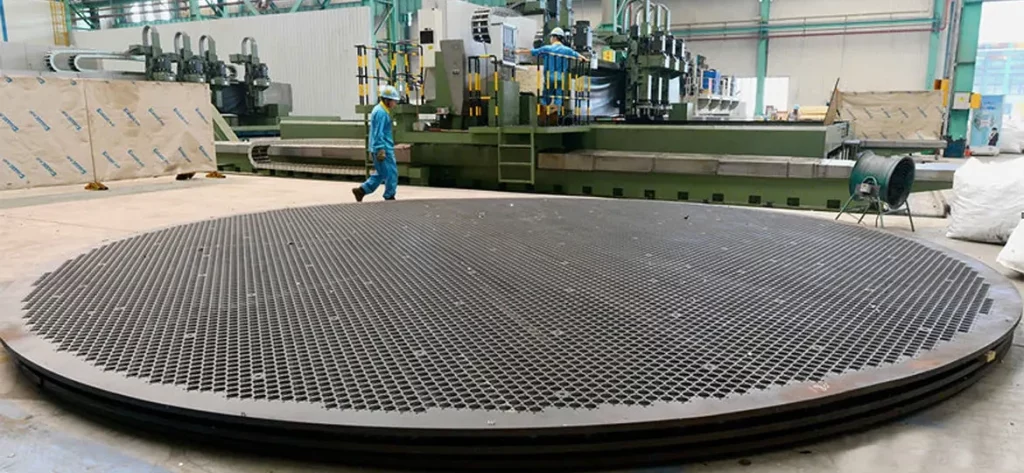
Stainless steel tube sheets are an essential component of many industrial processes. They are used in a wide range of applications, including chemical processing, power generation, and marine engineering. In this article, we will explore the benefits of using stainless steel tube sheets and provide examples of successful projects that have implemented this technology.
Project Cases
One notable project that utilized stainless steel tube sheets was the construction of a desalination plant in Dubai. The tube sheets were used in the heat exchangers, which were responsible for transferring heat between the seawater and the evaporator. The use of stainless steel tube sheets allowed the plant to operate more efficiently and with lower maintenance costs than other materials.
Another project that implemented stainless steel tube sheets was the construction of a nuclear power plant in China. The tube sheets were used in the steam generators, which are crucial components in the power generation process. The use of stainless steel tube sheets ensured that the steam generators could withstand the high pressures and temperatures required for efficient operation.
For more stainless steel tube sheet cases, feel free to contact us at sales3@openex.com.cn.
Benefits of Stainless Steel Tube Sheets
The benefits of using stainless steel tube sheets are numerous. First and foremost, stainless steel is highly resistant to corrosion and erosion, making it an ideal material for use in harsh environments. Additionally, stainless steel is incredibly strong and durable, which means that it can withstand high pressures and temperatures without deforming or breaking down.
Furthermore, stainless steel tube sheets are cost-effective and require minimal maintenance. Because they are resistant to corrosion and erosion, they do not need to be replaced as frequently as other materials. This translates to lower costs and less downtime for your business.
FAQ
Q: Can stainless steel tube sheets be customized to fit my specific needs? A: Yes, stainless steel tube sheets can be customized to fit any size or shape required for your application.
Q: Are stainless steel tube sheets difficult to install? A: No, stainless steel tube sheets can be easily installed by trained professionals.
Q: Will stainless steel tube sheets work with my existing system? A: Yes, stainless steel tube sheets are compatible with a wide range of systems and can be adapted to fit your specific needs.
Contact us
If you are interested in learning more about how stainless steel tube sheets can benefit your business, please contact us at sales3@openex.com.cn. Our team of experts can provide you with the information and support you need to make an informed decision about implementing stainless steel tube sheets in your processes.
Please visit Tube Sheet to find more information about our manufacturing capabilities of tube sheets.
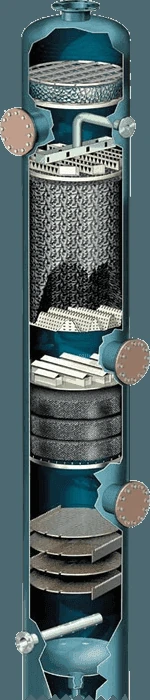
Tower internals refers to the various components that are installed inside a tower or column used for chemical or physical separation processes in industries such as oil and gas, petrochemicals, and pharmaceuticals. The design of tower internals plays a critical role in determining the efficiency and effectiveness of separation processes.
Some common types of tower internals
Trays: Trays are horizontal platforms that are installed inside a tower at various levels. They provide a surface area for liquid and gas to interact and allow for separation by gravity. The most common types of trays include sieve trays, valve trays, bubble cap trays, and fixed valve trays.
Packings: Packings are typically used in packed columns and consist of a bed of inert materials that provide a large surface area for mass transfer. Common materials used for packing include metal, plastic, and ceramic. The most common types of packings include structured packings, random packings, and high-performance packings.
Demisters: Demisters are devices that are used to remove liquid droplets from a gas stream. They typically consist of a mesh or vane structure that causes the droplets to coalesce and fall back into the liquid phase.
Distributors: Distributors are devices that are used to evenly distribute a liquid stream across the tower's cross-sectional area. They can be in the form of trays, weirs, or nozzles.
Liquid redistributors: Liquid redistributors are used to redistribute the liquid phase across the tray or packing surface. They can be in the form of pipes or troughs.
Internals supports: Internals supports are used to support the weight of the tower internals and ensure proper alignment. They can be in the form of beams, hangers, or brackets.
Instrumentation: Instrumentation is used to monitor and control the tower's performance. Common instrumentation includes temperature sensors, pressure gauges, and flow meters.
The design and selection of tower internals depend on the specific process requirements, such as the types of materials being separated, the flow rates, and the desired separation efficiency.
Materials of the tower internals
The materials used for tower internals are chosen based on a number of factors, including the following:
The type of tower and the process it is used for
The operating conditions of the tower, such as temperature, pressure, and corrosiveness
The cost of the materials
The availability of the materials
The regulatory requirements
The Most Common Materials Used for Tower Internals
Carbon steel: This is a relatively inexpensive material that is often used for towers that are not exposed to harsh conditions.
Stainless steel: This is a more expensive material that is resistant to corrosion. It is often used for towers that are used to process corrosive materials.
Titanium: This is a very expensive material that is highly resistant to corrosion. It is often used for towers that are used to process very corrosive materials.
Ceramics: This is a material that is resistant to high temperatures and corrosion. It is often used for towers that are used to process high-temperature or corrosive materials.
Plastics: This is a relatively inexpensive material that is easy to work with. It is often used for towers that are used to process non-corrosive materials.
The type of material used for tower internals will have a significant impact on the performance of the tower. It is important to select the right type of material for the specific application.
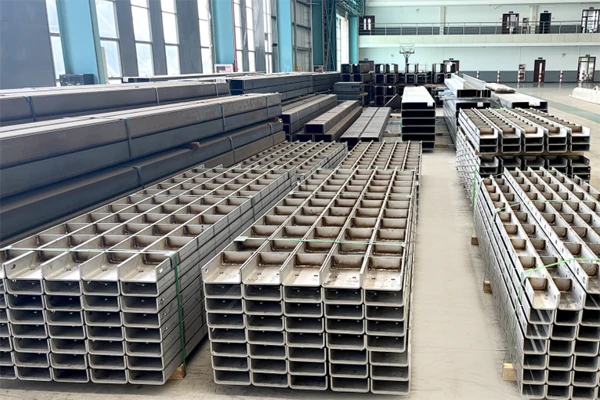
Metal structure supports of tower internals are used to support the internals of a tower. They are typically made of stainless steel and carbon steel, but other metals, such as titanium and nickel, may be used for applications where corrosion resistance is critical.
The metal internals supports pictured is made of 304L, and the fabrication process involves cutting, straightening, bending, rolling, welding, etc.
Metal structure supports are available in a variety of shapes and sizes and are designed to provide the optimum surface area for mass transfer. They are also designed to minimize pressure drop and to provide a good distribution of the liquid and gas phases.
Common Types of Metal Structure Supports
Grid supports. These are made of perforated metal or plastic and are used to support the packing material.
Plate supports. These are made of metal or plastic and are used to support the trays or packing.
Hangers. These are used to suspend the internals from the tower shell.
The type of metal structure support used will depend on the specific application. For example, grid supports are often used in distillation towers, while plate supports are often used in absorption towers.
Metal structure supports can have a significant impact on the performance of a tower. It is important to select the right type of support for the specific application, and to ensure that they are properly installed and maintained.
The Benefits of Using Metal Structure Supports of Tower Internals
They can help to improve the efficiency of the tower by providing a more uniform distribution of the liquid and gas phases.
They can help to reduce the pressure drop across the tower by providing a more efficient path for the liquid and gas phases to flow.
They can help to extend the life of the tower by preventing the internals from being damaged by the liquid and gas phases.
They can help to improve the safety of the tower by preventing the internals from being dislodged and falling into the tower.
Some of the things to consider when selecting metal structure supports for tower internals
The type of tower and the process it is used for
The operating conditions of the tower, such as temperature, pressure, and corrosiveness
The cost of the supports
The availability of the supports
The regulatory requirements
It is important to select the right type of metal structure support for the specific application. The wrong type of support can have a negative impact on the performance of the tower.
Contact us at sales3@openex.com.cn to know more about the metal structure supports or to request a quote.
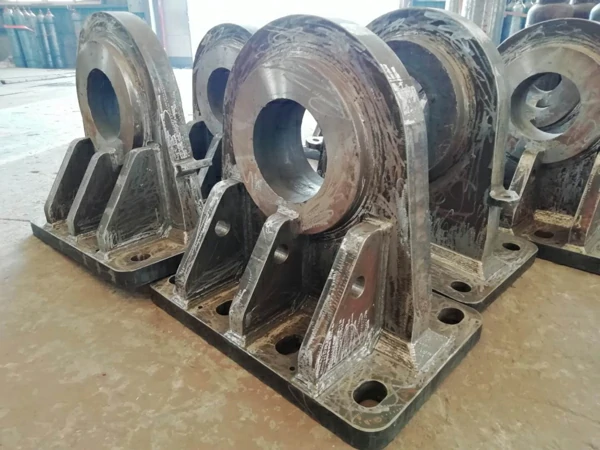
Steel casting is a specialized form of casting involving various types of steel cast to either final/net or near-net shape. Steel castings are used when iron castings cannot deliver enough strength or shock resistance. Examples of items that are steel castings include: hydroelectric turbine wheels, forging presses, gears, railroad truck frames, valve bodies, pump casings, mining machinery, marine equipment, turbocharger turbines and engine cylinder blocks.
Commonly Used Steel Castings
Some common types of steel castings that are widely used in various industries including:
Pump and valve components: Steel castings are often used to manufacture pump impellers, valve bodies, and other components used in fluid handling applications.
Gears and gearboxes: Steel castings are ideal for producing high-strength gears used in heavy machinery, such as construction equipment, industrial machinery, and automobiles.
Railroad components: Steel castings are used in the production of railroad components such as wheels, couplings, and brake components.
Mining equipment: Steel castings are used in the production of heavy-duty mining equipment such as crushers, grinding mills, and excavator components.
Energy industry components: Steel castings are used in the production of components such as turbine blades, generator rotors, and compressor parts for use in the energy industry.
Aerospace components: Steel castings are used in the production of components such as landing gear components, engine parts, and structural components for use in the aerospace industry.
Automotive components: Steel castings are used in the production of components such as engine blocks, transmission cases, and suspension parts for use in the automotive industry.
Types of Steel Castings
There are several types of steel castings, which are differentiated based on their composition and properties. Some of the most common types of steel castings include:
Carbon steel castings: These castings are made from steel with a high carbon content, which makes them hard and strong. They are often used in applications where strength and wear resistance are important.
Alloy steel castings: These castings are made from steel that is alloyed with other elements such as chromium, nickel, and molybdenum. This enhances the steel's properties such as strength, toughness, and corrosion resistance.
Stainless steel castings: These castings are made from steel that contains at least 10% chromium, which gives them excellent corrosion resistance. They are often used in applications where resistance to chemicals or high temperatures is important.
Tool steel castings: These castings are made from steel that is specifically designed for use in tools and dies. They are typically very hard and wear-resistant, making them ideal for cutting and forming operations.
Wear-resistant steel castings: These castings are made from steel that is specifically designed to resist wear and abrasion. They are often used in mining, construction, and other applications where heavy wear is expected.
Benefits of Steel Castings
There are several benefits of using steel castings in various applications. Some of the key benefits include:
Strength and durability: Steel castings are known for their exceptional strength and durability, making them ideal for use in heavy-duty applications where strength and toughness are critical.
Versatility: Steel castings can be produced in a wide range of sizes and shapes, making them highly versatile and adaptable to various applications.
Corrosion resistance: Certain types of steel castings, such as stainless steel castings, offer excellent resistance to corrosion, making them ideal for use in harsh environments where corrosion is a concern.
Precision: Steel castings can be produced with a high degree of precision, making them ideal for use in applications where accuracy and repeatability are important.
Cost-effectiveness: Steel castings can be produced in large quantities at a relatively low cost, making them a cost-effective solution for many applications.
Design flexibility: Steel castings can be customized to meet specific design requirements, allowing for greater design flexibility and innovation.
Reduced machining requirements: Steel castings often require less machining than other manufacturing processes, resulting in reduced costs and lead times.
Steel castings are an essential part of the global economy. They are used in a wide variety of industries and applications and offer several advantages over other types of metal products.
Cast iron is a group of iron-carbon alloys with a carbon content greater than 2%. It is made by melting iron and adding carbon and other elements to the molten metal, which is then poured into a mold to cool and solidify. The resulting material has a crystalline structure that is highly resistant to wear and deformation.
How is Cast Iron Made?
Cast iron is made by melting iron and adding carbon and other elements to the molten metal, which is then poured into a mold to cool and solidify. Here are the basic steps involved in making cast iron:
Melting the iron: The first step in making cast iron is to melt iron in a furnace at temperatures of around 2,800 degrees Fahrenheit. The iron is typically sourced from iron ore or scrap iron.
Adding the alloying elements: Once the iron is melted, carbon and other elements such as silicon, manganese, and sulfur are added to the molten metal to create the desired alloy. The exact composition of the alloy depends on the specific application and properties required.
Pouring the molten metal into molds: The molten metal is then poured into a mold, which is typically made of sand or metal. The mold is designed to create the desired shape and structure of the final product.
Cooling and solidifying the metal: As the molten metal cools, it solidifies and takes on the shape of the mold. This process can take several minutes to several hours depending on the size and complexity of the casting.
Removing the casting from the mold: Once the metal has solidified, the casting is removed from the mold. The casting is typically cleaned and finished to remove any rough edges or imperfections.
Heat treatment: Depending on the desired properties of the final product, the casting may undergo a heat treatment process to improve its strength, hardness, and other characteristics.
Casting Methods of Cast Iron
The manufacturing process of cast iron is also named cast iron casting. There are several casting methods used to make cast iron, each with its own advantages and disadvantages. Here are some of the most common casting methods used for cast iron:
Sand casting: Sand casting is the most common method for making cast iron. It involves creating a mold made of sand around a pattern or model of the final product. Molten iron is then poured into the mold, and once it has cooled and solidified, the mold is broken open and the casting is removed.
Investment casting: Investment casting, also known as lost-wax casting, is a method of casting that involves creating a wax or plastic pattern of the final product. The pattern is then coated with a ceramic material and heated to create a mold. Molten iron is then poured into the mold, and once it has cooled and solidified, the ceramic shell is broken open and the casting is removed.
Die casting: Die casting is a method of casting that involves injecting molten iron into a metal mold under high pressure. The mold is typically made of steel, and the process is used to create small, complex parts with a high degree of accuracy and consistency.
Continuous casting: Continuous casting is a method of casting that involves pouring molten iron into a water-cooled mold that moves continuously through a series of rollers. The process is used to create long, continuous sections of cast iron, such as pipes and bars.
Centrifugal casting: Centrifugal casting is a method of casting that involves spinning a mold filled with molten iron at high speeds. The centrifugal force helps to distribute the molten metal evenly throughout the mold, creating a casting with a dense, uniform structure.
Types of Cast Iron
There are several types of cast iron, each with its own unique properties and applications. Here are some of the most common types of cast iron:
Gray iron: Gray iron is the most common type of cast iron, accounting for around 80% of all castings. It is named for its gray color, which is due to the presence of graphite flakes in the metal. Gray iron is relatively easy to cast, and has good wear resistance and vibration damping properties, making it ideal for use in engine blocks, gears, and other machinery components.
Ductile iron: Ductile iron, also known as nodular iron or spheroidal graphite iron, is similar to gray iron, but with the addition of small amounts of magnesium or cerium. This causes the graphite to form in nodules or spheres, rather than flakes, giving the metal increased ductility and toughness. Ductile iron is commonly used in automotive components, pipes, and other applications that require strength and durability.
White iron: White iron is named for its white color, which is due to the absence of graphite in the metal. Instead, the carbon in white iron is present in the form of cementite, a hard, brittle compound. White iron has excellent wear resistance, making it ideal for use in applications such as grinding balls, liners, and other abrasion-resistant components.
Malleable iron: Malleable iron is made by annealing white iron, which causes the cementite to decompose into graphite. This gives the metal increased ductility and toughness, while still retaining its wear resistance. Malleable iron is used in applications such as pipe fittings, hand tools, and other components that require both strength and flexibility.
Compacted graphite iron: Compacted graphite iron is a relatively new type of cast iron that has properties intermediate between gray iron and ductile iron. It is named for the compacted graphite flakes that are present in the metal, which give it increased strength and thermal conductivity compared to gray iron, while still retaining good damping properties. Compacted graphite iron is used in applications such as cylinder blocks, brake rotors, and other automotive components.
Benefits and Disadvantages of Cast Iron
Cast iron has both benefits and disadvantages, depending on the specific application. Here are some of the most notable advantages and disadvantages of cast iron:
Benefits:
Good casting properties: Cast iron has excellent casting properties, making it easy to cast into complex shapes and sizes.
High wear resistance: Cast iron has excellent wear resistance, making it ideal for use in applications such as engine blocks, gears, and other machinery components.
Good vibration damping properties: Cast iron has good vibration damping properties, which makes it ideal for use in applications where noise and vibration are a concern.
Low cost: Cast iron is relatively inexpensive compared to other metals, making it an attractive option for applications where cost is a concern.
Thermal conductivity: Cast iron has good thermal conductivity, which makes it ideal for use in applications where heat dissipation is important.
Disadvantages:
Brittle: Cast iron is relatively brittle, meaning it can crack or break under stress.
Low tensile strength: Cast iron has relatively low tensile strength compared to other metals, making it unsuitable for applications that require high tensile strength.
Corrosion: Cast iron is susceptible to corrosion, especially in acidic or salty environments.
Heavy: Cast iron is relatively heavy compared to other metals, which can make it difficult to handle and transport.
Machinability: Cast iron can be difficult to machine, which can increase manufacturing costs and lead times.
Application of Cast Iron
Cast iron is used in a wide range of applications across various industries due to its unique properties, including good casting properties, high wear resistance, good vibration-damping properties, and low cost. Here are some of the most common applications of cast iron:
Automotive industry: Cast iron is commonly used in the automotive industry for engine blocks, cylinder heads, brake rotors, and other components.
Construction industry: Cast iron is used in the construction industry for drainage pipes, manhole covers, and other infrastructure components.
Industrial machinery: Cast iron is used in industrial machinery for gears, pulleys, and other components that require high wear resistance and vibration-damping properties.
Agricultural equipment: Cast iron is used in agricultural equipment for plowshares, cultivator points, and other components that require high wear resistance.
Household appliances: Cast iron is used in household appliances such as cookware, stoves, and fireplaces.
Art and architecture: Cast iron is used in artistic and architectural applications, such as ornamental fences, sculptures, and other decorative elements.
Cast iron is an iron alloy that contains a high percentage of carbon and other alloying elements. There are several types of cast iron, including gray iron, ductile iron, white iron, and malleable iron, each with unique properties and applications. Cast iron is used in a wide variety of applications, including machinery, plumbing, heating and cooling, transportation, and construction. It is a versatile material with many advantages, such as strength, durability, and ease of casting. However, it also has some disadvantages, such as brittleness and weight.
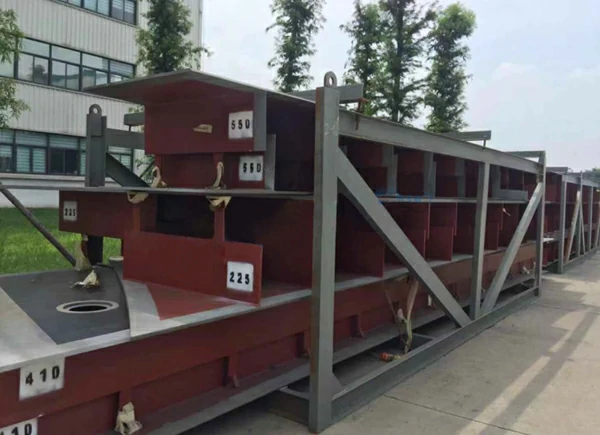
3000 tons of fabricated steel structures for hydropower were delivered to America. The material of the fabricated steel structures is ASTM-A36 carbon steel. The main fabrication process involves cutting, edge milling, welding, assembling, inspection, painting, packing, etc.
What's a Fabricated Steel Structure?
Fabricated steel structures refer to structures that are constructed using prefabricated steel components that are manufactured offsite and then assembled on-site. These structures can include buildings, bridges, towers, and other infrastructure. Steel is a popular choice for fabrication because of its strength, durability, and versatility.
The fabrication process typically involves cutting, bending, and welding steel components to create the desired structure. Computer-aided design (CAD) software is often used to design the components, which are then manufactured using automated machinery. The finished components are transported to the construction site and assembled using cranes and other heavy machinery.
One of the main advantages of using fabricated steel structures is that they can be designed and constructed quickly, which can save time and money. The prefabricated components are also more consistent in quality, which can lead to fewer construction errors and a higher level of structural integrity. Additionally, steel structures are resistant to fire, termites, and other hazards, which can make them a safer choice for certain applications.
Common Used Fabricated Steel Structures In Hydropower
Fabricated steel structures are often used in the construction of hydropower plants. These structures can be used for a variety of purposes, including:
Penstocks: Penstocks are large pipes that carry water from the reservoir to the turbines. These pipes are often made of steel to withstand the high pressure and force of the water.
Turbines: The turbines themselves are often made of steel and are designed to withstand the force of the water as it flows through them.
Gates: Gates are used to control the flow of water through the plant. These gates can be made of steel and are often operated hydraulically.
Powerhouse: The powerhouse is the building that houses the turbines and generators. The structure of the powerhouse is often made of steel to provide a strong and durable structure that can withstand the weight of the equipment.
Transmission lines: The electricity generated by the hydropower plant needs to be transmitted to the grid. Transmission lines are often supported by steel towers.
We are a leading manufacturer of fabricated metal componentsMetal Fabrication for numerous industries. With our state-of-the-art equipment and our years of experience, Openex can take your design from prototype to production in the time you need and the quality you expect. Contact us today at sales3@openex.com.cn to know more about our fabricated structures and request a free quote.
The condenser plays a critical role in the efficient operation of a power plant by removing heat from the steam and transferring it to the cooling water, creating a vacuum to increase the efficiency of the turbine, removing non-condensable gases, collecting condensate for reuse, and protecting the environment by ensuring that the cooling water is safe to discharge.
The water chamber is a part of the condenser. In the condenser, the water chamber is located in the lower part of the shell, below the bundle of tubes. The exhaust steam from the turbine is passed through the tube side of the condenser, while the cooling water flows through the water chamber in the shell. The heat from the steam is transferred to the cooling water, causing the steam to condense back into liquid form. The resulting condensate is then collected and reused in the power plant's steam cycle.
In general, the water chamber is typically made of a material that is resistant to corrosion and can withstand exposure to water and other fluids. Common materials used for the water chamber include stainless steel, copper, and brass. Stainless steel is a popular choice for the water chamber due to its resistance to corrosion and durability. Copper and brass are also commonly used, especially in smaller condensers, as they are good conductors of heat and can be easily formed into the desired shape.
Difficulties in the steel chamber manufacturing
The manufacturing of the water chamber for a condenser can be a complex and challenging process due to several factors. Some of the difficulties that may be encountered during the manufacturing process include:
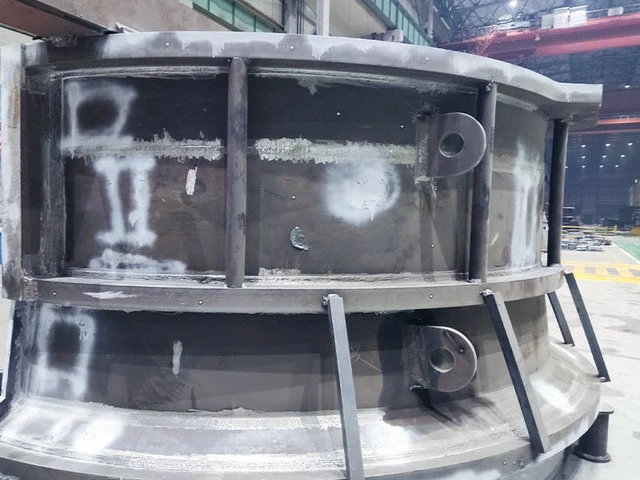
Size and Shape: The size and shape of the water chamber can vary depending on the specifications of the condenser. Creating a chamber with precise dimensions can be challenging, particularly if the chamber is large or has complex geometries.
Welding and Joining: The water chamber may be constructed from multiple parts that must be welded or joined together to create a complete chamber. Welding and joining must be performed carefully to avoid defects that could compromise the structural integrity of the chamber.
Machining Accuracy: Machining accuracy is critical to ensuring the efficient and reliable operation of the power plant. Any defects or inaccuracies in the chamber can have a significant impact on the performance of the condenser and the power plant as a whole.
Surface Finish: The surface finish of the water chamber is critical to its performance. A smooth surface finish is necessary to prevent fouling and scaling on the surface, which can reduce the efficiency of the condenser. Achieving a smooth surface finish can be challenging, particularly in large chambers with complex geometries.
Quality Control: The water chamber is a critical component of the condenser, and any defects or flaws could result in reduced performance or even failure of the entire condenser. Quality control measures must be put in place during the manufacturing process to ensure that the water chamber meets all design specifications and is free from defects.
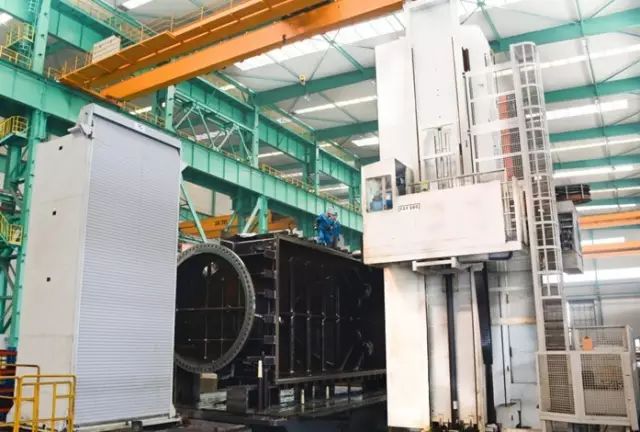
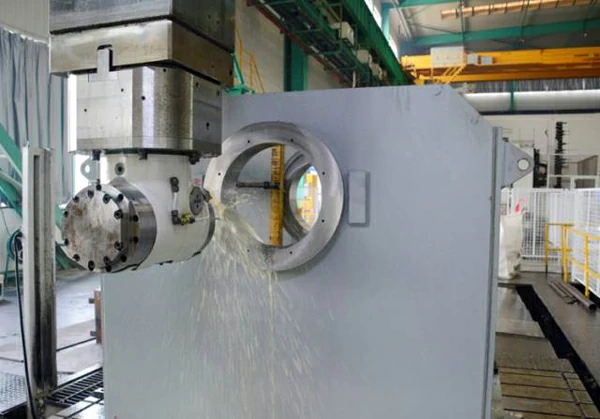
In the process of the steel chamber fabrication, we use high-precision machining equipment -- Italian Innse Berardi FAF 280, to ensure the quality of the steel chamber, which gets the full recognition of the customer.
A high-quality water chamber is crucial for the optimal performance of a condenser in a power plant. The accuracy of the machining process is vital to ensure the efficient transfer of heat from the steam to the cooling water, proper fluid flow, and low-pressure drops. Fouling and scaling can also result from inaccurate machining, which can further reduce the performance of the condenser. Therefore, it is essential to work with a professional fabrication company that has experience in the production of water chambers. Openex can ensure that the water chamber is manufactured accurately, with appropriate surface finishes and tolerances to meet the demanding requirements.
Contact us at sales3@openex.com.cn or call us at +86 186 5928 0806 for more information or to receive a free project quote today.
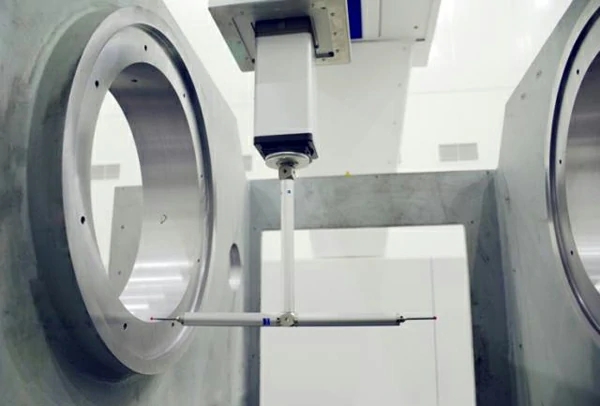
The steel frame component for the main body of the tire forming machine is finished machining as well as accuracy inspection. The customer has strict requirements on the precision of position, straightness, flatness, and other aspects of the component. The technical department determines the final processing technology after discussion, and the accuracy of the steel part has been highly praised by the customer.
Large Machining Component For Tire Forming Machine
CMM Inspection for the machined part
As the name implies, the tire-forming machine is a type of machinery used in the manufacturing process of tires. Its primary function is to shape and mold the tire components into the final tire shape, including the sidewall, bead, and tread. The tire-forming machine is a complex piece of equipment that utilizes several different components to achieve its function. These may include a bladder, which is used to press the tire into shape, and a mold, which is used to shape the tire into its final form.
The machined steel component is the main body of the tire-forming machine. The main body of a tire-forming machine is typically composed of a large steel frame. It is an essential component that provides the necessary support and structure for the machine to function effectively and efficiently in the tire manufacturing process.
As a professional metal fabrication company, we can provide a range of services for large steel frames of various equipment as well as a tire forming machine, from raw material to cutting, forming, welding, machining, assembling, and finishing. We ensure that the frame is manufactured to the highest standards of quality and durability and that it meets the customer's specific needs and requirements.
Contact us at sales3@openex.com.cn for more about our services or request free quotes with drawings.
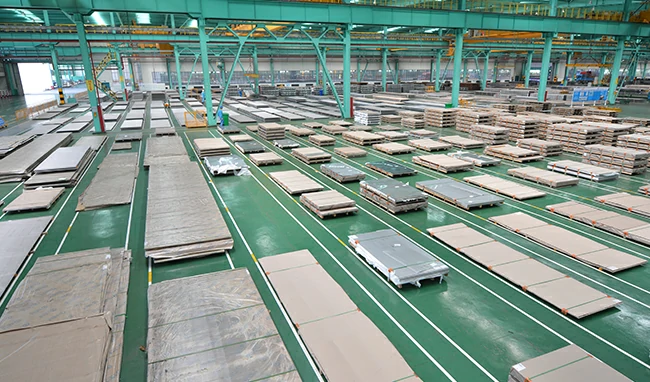
Stainless steel sheets and plates are highly versatile materials used in a wide variety of applications. They are known for their corrosion resistance, durability, and strength, making them an ideal choice for use in harsh environments. In this article, we'll explore the different types of stainless steel sheets and plates, their applications, and best practices for working with them.
Types of Stainless Steel Sheets and Plates
Stainless steel sheets and plates are available in a variety of grades and finishes, each suited to different applications. Some of the most common types of stainless steel sheets and plates include:
Austenitic stainless steel: This type of stainless steel is the most commonly used and is known for its excellent corrosion resistance, high ductility, and good weldability. It is often used in applications where high levels of hygiene are required, such as in the food processing and medical industries.
Ferritic stainless steel: This type of stainless steel is known for its high resistance to corrosion and magnetic properties. It is often used in automotive exhaust systems and other applications where resistance to high temperatures is required.
Martensitic stainless steel: This type of stainless steel is known for its high strength and hardness, as well as its corrosion resistance. It is often used in applications that require high levels of strength and durability, such as in the aerospace and defense industries.
Duplex stainless steel: This type of stainless steel is a combination of austenitic and ferritic stainless steel and is known for its high strength and corrosion resistance. It is often used in applications where resistance to harsh environments is required, such as in offshore oil and gas exploration.
Precipitation hardening stainless steel: This type of stainless steel is known for its high strength and resistance to corrosion and is often used in applications where high levels of strength are required, such as in the aerospace and defense industries.
Each type of stainless steel sheet and plate has its unique properties and advantages, making it suitable for different applications and industries. It is important to choose the right type of stainless steel for your specific application to ensure optimal performance and durability.
The Difference Between Stainless Steel Sheets and Plates
The main difference between the two is their thickness.
Steel plates are typically thicker than steel sheets, usually over 6mm thick. They are often used in heavy-duty applications such as construction, mining, and manufacturing. Steel plates are often cut and welded to create structural components such as beams, columns, and trusses.
Steel sheets, on the other hand, are thinner than steel plates, usually less than 6mm thick. They are often used in applications where a lighter and more flexible material is required, such as in the automotive and aerospace industries. Steel sheets can also be used for decorative purposes, such as in architectural design and home furnishings.
Another difference between steel plates and steel sheets is their surface finish. Steel plates often have a rougher surface finish due to their thickness and manufacturing process, while steel sheets have a smoother finish.
Application of Stainless Steel Sheets and Plates
Kitchen appliances: Stainless steel sheet is commonly used in kitchen appliances such as refrigerators, dishwashers, and ovens due to its durability, corrosion resistance, and aesthetic appeal.
Architectural cladding: Stainless steel sheet is often used as a decorative cladding material for buildings due to its durability, corrosion resistance, and modern appearance.
Automotive industry: Stainless steel sheet is used in the automotive industry for applications such as exhaust systems, mufflers, and fuel tanks due to its corrosion resistance and high-temperature resistance.
Food processing: Stainless steel sheet is used in the food processing industry for equipment such as countertops, sinks, and food preparation surfaces due to its hygienic properties and ease of cleaning.
Industrial equipment: Stainless steel plate is used in the manufacturing of industrial equipment such as tanks, piping, valves, and pumps due to its excellent corrosion resistance and durability.
Construction: Stainless steel plate is used in the construction industry for cladding, roofing, and structural support due to its strength, durability, and aesthetic appeal.
Marine industry: Stainless steel plate is used in the marine industry for applications such as shipbuilding, offshore structures, and port facilities due to its corrosion resistance and durability in saltwater environments.
Chemical processing: Stainless steel plate is used in the chemical processing industry for equipment such as tanks, piping, and valves due to its excellent corrosion resistance and ability to withstand harsh chemicals.
Energy industry: Stainless steel plate is used in the energy industry for applications such as power generation, oil and gas exploration, and refining due to its high temperature and corrosion resistance.
Medical equipment: Stainless steel sheets and plates are used in the medical industry for equipment such as surgical tools, implants, and medical devices due to its biocompatibility and corrosion resistance.
Aerospace industry: Stainless steel sheets and plates are used in the aerospace industry for applications such as aircraft components and structural supports due to its high strength-to-weight ratio and corrosion resistance.
Working with Stainless Steel Sheets and Plates
When working with stainless steel sheets and plates, it's important to consider the following factors:
Material Properties: Stainless steel sheets and plates are known for their excellent corrosion resistance, durability, and strength. However, they are also relatively hard and can be challenging to work with. It's important to understand the material's properties and limitations before attempting to cut, shape, or weld it.
Cutting and Shaping Techniques: Stainless steel sheets and plates can be cut and shaped using a variety of techniques, including sawing, plasma cutting, laser cutting, waterjet cutting, rolling, bending, and pressing. It's important to choose the right technique for the parts and to use tools and equipment that are specifically designed for use with stainless steel.
Welding Techniques: Welding stainless steel requires specialized equipment and techniques. It's important to choose the right welding method for the job and to ensure that the material is properly prepared and cleaned before welding.
Safety Precautions: Working with stainless steel sheets and plates can pose several safety risks, including exposure to fumes and sharp edges. It's important to wear appropriate personal protective equipment, such as gloves, eye protection, and a respirator, and to follow proper safety procedures when handling and working with the material.
Finishing Techniques: Stainless steel sheets and plates can be finished using a variety of techniques, including polishing, grinding, and sandblasting. It's important to choose the right finishing method for the job and to ensure that the material is properly cleaned and prepared before finishing.
In conclusion, stainless steel sheets and plates are highly versatile materials used in a wide range of applications. They come in a variety of grades and finishes, each suited to different applications, and can be cut, formed, and finished to meet specific needs. If you require stainless steel sheets or plates for your project, it's important to work with a reputable supplier who can provide high-quality products and expert advice.
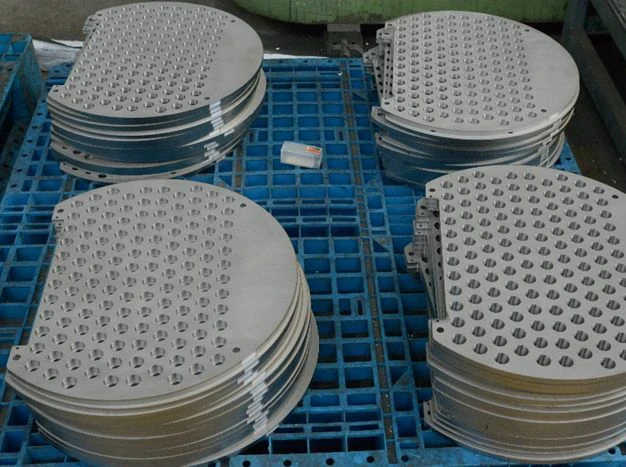
The batch of tube sheets is made of 10mm thick 304 stainless steel sheets. The fabrication process involves laser cutting, machining, etc. Delivery time is 15 days. The customer has worked with our company multiple times, and we have processed over 1000 metal parts for them to date. The customer is very satisfied with our products and service and has introduced related companies to cooperate with us.
Tube sheet manufacturing is a specialized field in the world of metalworking. It involves the creation of precision components that are used in heat exchangers, pressure vessels, and other industrial equipment. At Openex, we take pride in our ability to produce high-quality tube sheets that meet the exact specifications of our clients.
Many factors go into the manufacturing of tube sheets. The materials used must be of the highest quality, with the appropriate properties to withstand the extreme conditions they will be subjected to. We use a variety of materials, including stainless steel, carbon steel, and nickel alloys, depending on the specific needs of each project.
The process of creating tube sheets involves several steps, including cutting, drilling, and machining. We use the latest equipment and techniques to ensure precision and accuracy at every stage of production. Our skilled technicians have years of experience in the field and can produce tube sheets that meet even the most demanding requirements.
One of the key factors in the success of our tube sheet manufacturing operation is our commitment to quality. We use rigorous quality control processes to ensure that every product we produce meets the highest standards. This includes extensive testing and inspection of each component, as well as ongoing monitoring throughout the manufacturing process.
Tube sheet manufacturing is a specialized field that requires expertise, precision, and a commitment to quality. At Openex, we take pride in our ability to produce high-quality tube sheets that meet the exact specifications of our clients. If you require tube sheets for your industrial equipment, we would be happy to discuss your needs and provide a customized solution that meets your requirements.
About Openex
Openex is home to a full-service, one-stop-shop, contract manufacturing company producing custom large machined parts and fabrications. Our full large fabrication services including large machining, cutting, welding, rolling, punching, braking, testing, painting, and others.